
Media Houses and Stationery Shops Are Sinking Newspapers: Journalists Don’t Search for News, and Stationery Shops Don’t Let People Read!
-
Media Baaji

- Wed, 22 July 2026
Anusha Thapa
Bhaktapur – People who are poor or financially struggling are no longer deprived only of healthcare and education—they are increasingly being denied access to newspapers as well. Many stationery shops refuse to let customers browse newspapers unless they purchase them. As soon as newspapers arrive in the morning, they are stapled shut or hidden away to prevent people from reading them before buying.
Instead of allowing readers to browse and choose which newspaper they want, shopkeepers insist that customers pay first. This practice limits citizens’ right to access information about national and international events. Customers are often told to leave if they try to read a newspaper inside the shop.
Although stationery shops earn only a small profit from newspaper sales, they focus more on selling other items with higher margins. As a result, newspaper buyers receive little attention. Since multiple newspapers are published every day, readers cannot afford to buy all of them. They should be able to browse and select the one that interests them, but in many cases, that opportunity is denied.
Journalists spend significant time and effort gathering and writing news. If readers cannot access those stories, the purpose of journalism is undermined. Media houses also fail to monitor whether their newspapers are reaching readers effectively. Unsold copies are simply returned the next day.
The newspaper industry is already struggling to survive. Investigative journalism has declined, page counts have shrunk, and prices have increased. Many newspapers rely heavily on wire-service content and advertisements rather than original reporting. Readers buy newspapers expecting fresh and exclusive stories, not pages filled mostly with advertisements or recycled news.
Public places that once displayed newspapers for free reading have largely disappeared, making access even harder for people who cannot afford to buy them. Reintroducing newspapers in public spaces could help improve public access to information.
A major reason investigative journalism is disappearing is poor treatment of journalists. Many media organizations fail to pay salaries on time, leaving reporters financially stressed and unable to focus on producing quality journalism. Better wages, benefits, and professional support would encourage stronger reporting.
Journalism should be about uncovering original stories—not simply republishing agency reports. In the digital era, online platforms deliver breaking news instantly. Newspapers can remain relevant only by producing exclusive, investigative, and in-depth reporting that readers cannot easily find elsewhere.
The article also criticizes political bias within sections of the media, arguing that some outlets protect their preferred political groups while attacking others. It concludes that media owners should treat journalism as a public service rather than merely a business, pay journalists fairly, encourage independent reporting, and restore public trust in newspapers.




Related News
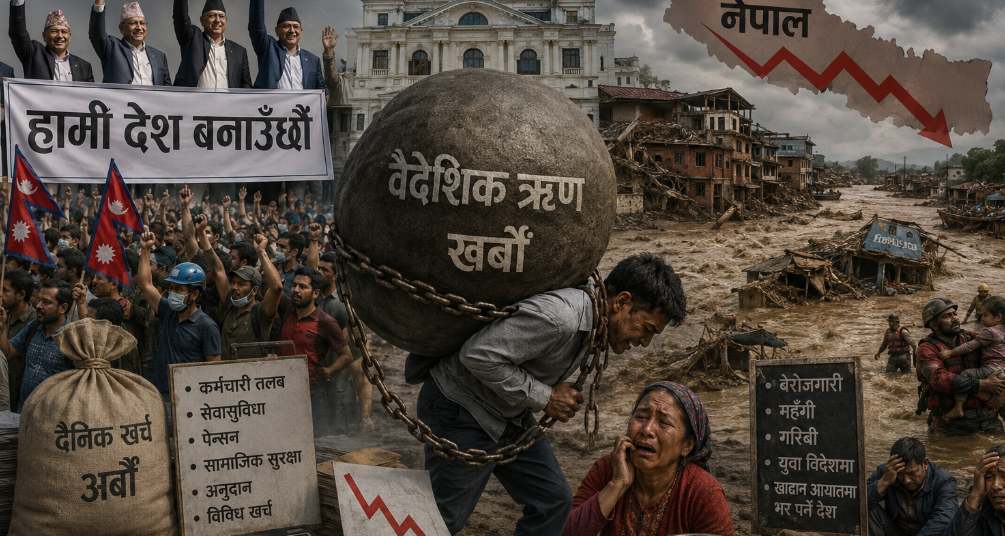
The slogan of making the country of all parties, the country will not be in a state of chaos!
rusha thapa
Bhaktapur. Nepal has been on the grey list for 20 months. The country was placed on the grey list on September 9, 2016. We have only four months to get off the grey list. If Nepal is not removed from the grey list in the coming mont...

Concerns about declining agro-biodiversity and increasing food security in rural households
Kathmandu. "How much will the millet grow this year, mother?"
"Where is the father! It has been two or four years since the seeds were planted."
"The wheat just disappeared! The market seed left one year and...

Government Employees Enjoy Benefits While the State Struggles, Public Faces Growing Financial Despair
By Rusha Thapa______
Bhaktapur_ The Government of Nepal continues to provide monthly pensions to retired civil servants, with payments typically deposited into beneficiaries' bank accounts before the 10th of each month. Depending on t...

The elephant came, the elephant came, and the federalism came
Hari Khatiwada
Kathmandu. There is a proverb in Nepali, "While trying to pick the ground, the pole fell." Yes, we are walking on the same path. Other countries modify their culture and taste their own to the world, while we forget ou...

The day that Nepal will be blacklisted is approaching, Finance Minister Wagle on his own!
Rusha Thapa
Bhaktapur. Only eight months are left until the month of January. Within eight months, Nepal will be blacklisted without leaving the graylist. It has been a month since the formation of the RSVP government led by Wale...

Education, Sports and Entrepreneurship: The Foundation of a Prosperous Society from Responsible Youth
mediabaji.com Kathmandu October 30 The youth of Nepal today is at a decisive moment in history. Despite the lack of opportunities in the country, the attraction of foreign employment and political instability, some young...