
Media Houses and Stationery Shops Are Sinking Newspapers: Journalists Don’t Search for News, and Stationery Shops Don’t Let People Read!
-
Media Baaji

- Wed, 22 July 2026
Anusha Thapa
Bhaktapur – People who are poor or financially struggling are no longer deprived only of healthcare and education—they are increasingly being denied access to newspapers as well. Many stationery shops refuse to let customers browse newspapers unless they purchase them. As soon as newspapers arrive in the morning, they are stapled shut or hidden away to prevent people from reading them before buying.
Instead of allowing readers to browse and choose which newspaper they want, shopkeepers insist that customers pay first. This practice limits citizens’ right to access information about national and international events. Customers are often told to leave if they try to read a newspaper inside the shop.
Although stationery shops earn only a small profit from newspaper sales, they focus more on selling other items with higher margins. As a result, newspaper buyers receive little attention. Since multiple newspapers are published every day, readers cannot afford to buy all of them. They should be able to browse and select the one that interests them, but in many cases, that opportunity is denied.
Journalists spend significant time and effort gathering and writing news. If readers cannot access those stories, the purpose of journalism is undermined. Media houses also fail to monitor whether their newspapers are reaching readers effectively. Unsold copies are simply returned the next day.
The newspaper industry is already struggling to survive. Investigative journalism has declined, page counts have shrunk, and prices have increased. Many newspapers rely heavily on wire-service content and advertisements rather than original reporting. Readers buy newspapers expecting fresh and exclusive stories, not pages filled mostly with advertisements or recycled news.
Public places that once displayed newspapers for free reading have largely disappeared, making access even harder for people who cannot afford to buy them. Reintroducing newspapers in public spaces could help improve public access to information.
A major reason investigative journalism is disappearing is poor treatment of journalists. Many media organizations fail to pay salaries on time, leaving reporters financially stressed and unable to focus on producing quality journalism. Better wages, benefits, and professional support would encourage stronger reporting.
Journalism should be about uncovering original stories—not simply republishing agency reports. In the digital era, online platforms deliver breaking news instantly. Newspapers can remain relevant only by producing exclusive, investigative, and in-depth reporting that readers cannot easily find elsewhere.
The article also criticizes political bias within sections of the media, arguing that some outlets protect their preferred political groups while attacking others. It concludes that media owners should treat journalism as a public service rather than merely a business, pay journalists fairly, encourage independent reporting, and restore public trust in newspapers.






Related News
The slogan of making the country of all parties, the country will not be in a state of chaos!
rusha thapa
Bhaktapur. Nepal has been on the grey list for 20 months. The country was placed on the grey list on September 9, 2016. We have only four months to get off the grey list. If Nepal is not removed from the grey list in the coming mont...

In the name of cheating in the name of foreign employment and education, even the Balen government could not shut down!
Kathmandu. Recently, the number of people going for foreign employment has increased rapidly. As there is not enough employment in the country, foreign employment has become the mainstay of Nepalese. However, fraud in the name of foreign employmen...
Two Laws Under One Government: Banks Can Charge Any Interest They Want, Individuals Face Jail
By Anusha Thapa
One government, but two different laws. The issue is interest rates. The government allows banks and financial institutions to determine their own interest rates. Banks, finance companies, cooperatives, and micr...

RSP’s Big Promises to Build the Nation, But Hesitation When It Comes to Helping Flood Victims!
By Rusha Thapa
Bhaktapur – The devastating flood that struck the Bhotekoshi River in Rasuwa on Bhadra 10 caused massive loss of life and property. Thousands have died, many are still missing, and countless families have been displaced...

A mansion-like house, covered in gold jewelry, yet starving because there is no cooking gas!
Rusha Thapa
Bhaktapur. Four decades ago, Nepal was largely self-sufficient in almost everything. We had enough of our own food, timber and other necessities. Almost every person had farmland or some kind of land. People produced the grains a...
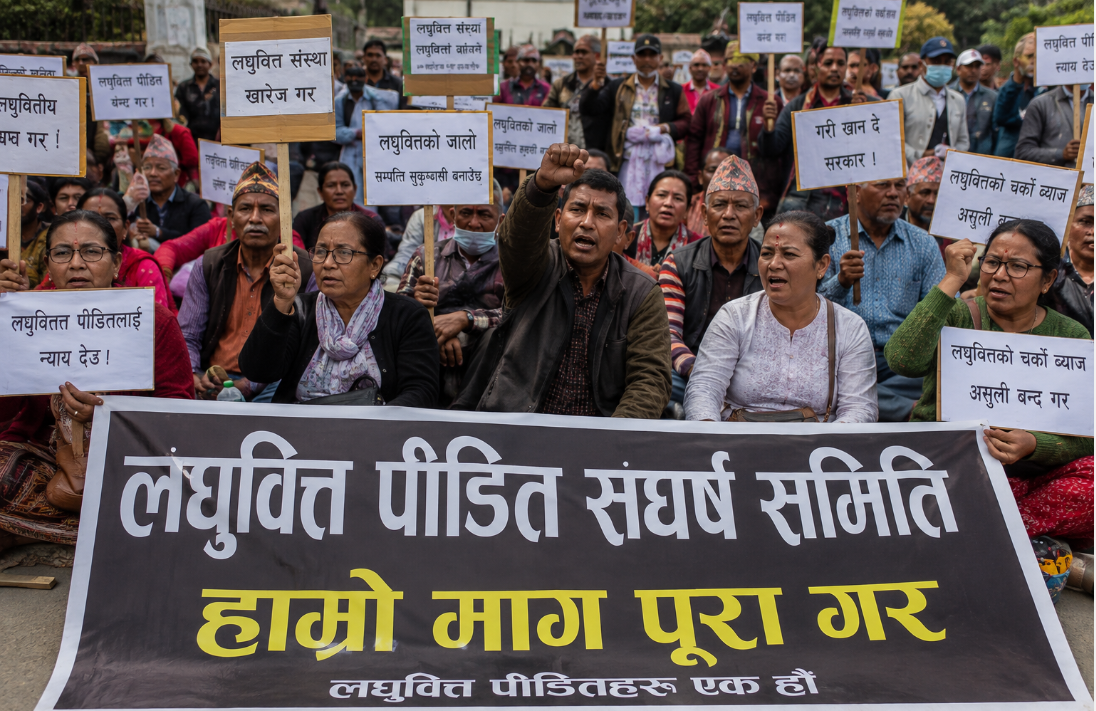
Financial Victims Have Been on the Streets for Months, While the Government Is Focused on Durga Prasai
Rusha Thapa
Bhaktapur. The protest of microfinance victims is still ongoing. For months, they have been staging sit-ins at the National Human Rights Commission and other government bodies, demanding justice. Their suffering has become unbear...