
Financial Victims Have Been on the Streets for Months, While the Government Is Focused on Durga Prasai
-
Media Baaji

- Sat, 22 August 2026
Rusha Thapa
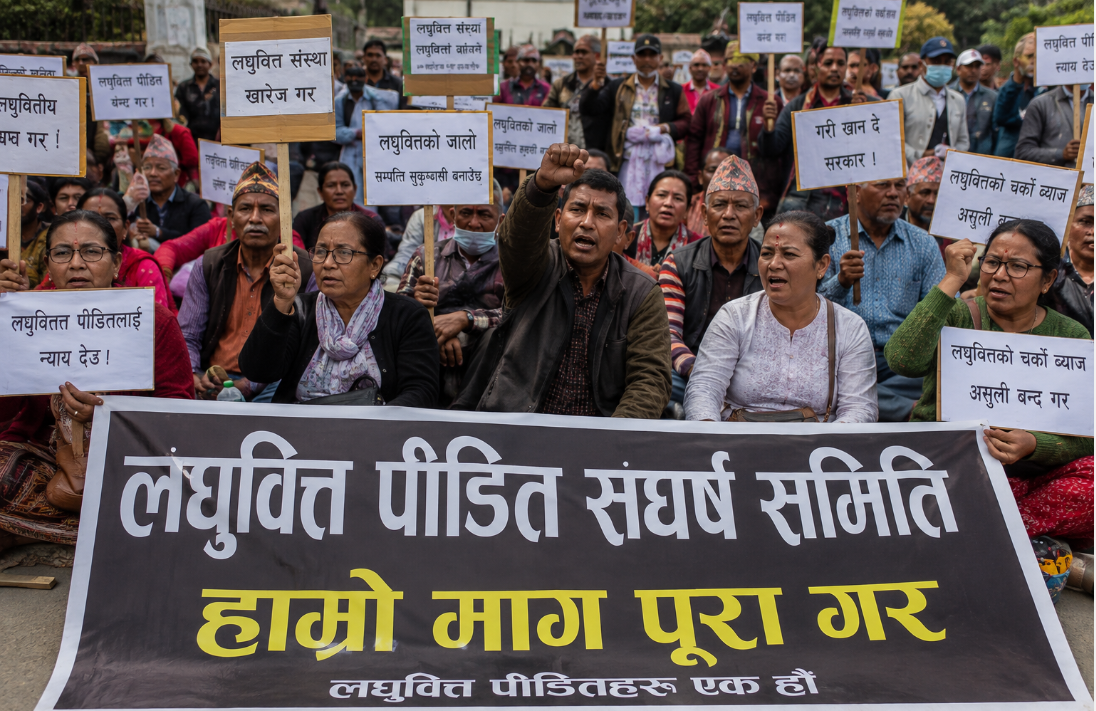
Bhaktapur. The protest of microfinance victims is still ongoing. For months, they have been staging sit-ins at the National Human Rights Commission and other government bodies, demanding justice. Their suffering has become unbearable. After losing their homes, property, and livelihoods, many of them have been forced onto the streets.
Ironically, instead of listening to the victims, the government is allegedly focusing its attention on medical entrepreneur Durga Prasai, accusing him of instigating victims and conducting searches at his residence. Meanwhile, countless ordinary citizens claim they have been financially ruined because of microfinance institutions.
Victims allege that loans advertised at 12 percent interest eventually resulted in collections reaching as high as 80 percent. They claim borrowers were charged an additional three percent service fee and up to 20 percent commission simply for receiving the loan. According to their allegations, if borrowers failed to pay three installments, their collateral was immediately auctioned.
Some victims further claim that certain microfinance institutions auctioned collateral even while borrowers were continuously paying principal and interest.
The allegations are not limited to microfinance institutions alone. Victims also accuse cooperatives, finance companies, and banks of engaging in exploitative financial practices. Despite such accusations emerging around the country's main administrative center, they argue that the government has remained silent.
One institution frequently mentioned by victims is Sincere Saving and Credit Cooperative located in Putalisadak. According to the allegations presented by the victims, the cooperative has been involved in fraudulent financial practices for decades.
Registered with the Cooperative Department on Mangsir 29, 2057 BS, the cooperative is accused of pushing thousands of people into financial hardship. Victims allege that Chairman Rajendra Bhakta Shrestha, Chief Executive Officer Rajesh Khadka, and Loan Officer Mira Karmacharya have collectively operated a system that turns wealthy individuals into financially devastated borrowers. These are allegations made by complainants and have not been established by a court verdict.
According to the claims, Sincere Cooperative mainly provides loans against taxis. Victims allege that a taxi valued at around Rs. 3 million is accepted as collateral while only Rs. 1.8 million is issued as a loan. From that amount, they claim the cooperative deducts Rs. 27,000 as commission, charges a three percent service fee, and eventually collects interest and related charges that may reach up to 80 percent.
Victims also allege that borrowers are forced to insure their collateral at their own expense and renew the insurance every year. They further claim that the cooperative receives commission from insurance companies while borrowers bear all insurance costs.
According to the allegations, borrowers are required to sign blank Nepali paper documents and provide thumbprints before receiving loans. Victims claim that if three installments are missed, collateral is auctioned without properly informing the borrower.
Nepalese law requires banks and financial institutions to notify borrowers before auctioning collateral and publish auction notices in national daily newspapers. However, victims allege that these legal procedures have often been ignored.
Some complainants even claim that collateral has been auctioned despite borrowers continuing to make installment payments. They allege that installment payments were transferred into savings accounts instead of being adjusted against loans, while additional penalties and fines continued accumulating.
Although Sincere is registered as a cooperative, victims claim it holds capital significantly larger than many commercial banks. They further allege that government employees, political leaders, businesspeople, and criminal groups have deposited large sums of money in the institution.
There are also allegations that illegally acquired wealth, untaxed income, corruption proceeds, and unexplained funds have been stored in the cooperative. These claims remain allegations made by complainants.
Complaints have reportedly been filed multiple times with the Commission for the Investigation of Abuse of Authority and the Department of Money Laundering Investigation.
According to the complaint records cited by the complainants, the first complaint against Sincere was registered on Chaitra 8, 2079 BS. The CIAA registration number was C-048809, while the Department of Money Laundering Investigation reportedly registered the complaint under number 4455.
Another complaint seeking an investigation into assets was reportedly filed on Shrawan 28, 2080 BS under registration number C-008062.
A third complaint was reportedly registered with the CIAA on Kartik 25, 2081 BS under registration number C-027485.
Despite repeated complaints, victims allege that political influence and financial power have protected the cooperative from serious action. These allegations have not been independently verified through a final judicial decision.
The article further argues that several political figures have themselves faced allegations involving cooperative fraud. It mentions that Rastriya Swatantra Party Chairman Rabi Lamichhane is facing cooperative-related cases in courts across five districts, where allegations concerning misuse of cooperative funds remain under judicial consideration.
Likewise, it refers to allegations against Bagmati Province minister Gyan Bahadur Tamang regarding the alleged embezzlement of approximately Rs. 1.5 billion belonging to a cooperative. Those matters are allegations and legal processes remain separate from any final determination of guilt.
According to victims, millions of citizens have suffered because of cooperatives, microfinance institutions, finance companies, and banks. Many have reportedly spent nearly five years protesting on the streets, sometimes through hunger strikes and sometimes through sit-ins.
Regardless of which government comes to power, they claim their demands remain unaddressed.
Many victims had hoped that the Balen-led government would at least listen to their concerns. However, they now argue that the government is attempting to suppress their voices instead of addressing their grievances.
The article questions why the government is placing greater emphasis on Durga Prasai rather than meeting financial victims and listening to their demands. It argues that Prasai is neither the borrower nor the depositor in these cases and therefore insists that the government's attention should shift toward the victims seeking justice.
According to the article, imprisoning or restricting one individual will not resolve the larger financial crisis. It claims that victims have now become capable of organizing and raising their own voices independently.
The article warns that continued neglect of victims could eventually result in wider social unrest and that the government should prioritize justice rather than silencing dissent.
Victims say they are demanding the return of their deposits, action against cooperative and microfinance fraud, accountability for excessive interest collection, and punishment for institutions that allegedly auction collateral arbitrarily.
They argue that they are not asking for salary increases or additional government privileges but simply seeking justice and the return of their lifelong savings.
The article also raises questions about government priorities, arguing that while governments can increase salaries and benefits for public employees, they have failed to provide justice to ordinary citizens who lost their savings and property.
According to the figures cited in the article, around 6.3 million people have borrowed through cooperatives, approximately 2.7 million through microfinance institutions, and around 2.2 million through banks. It further claims that millions have borrowed money through informal moneylending systems charging extremely high daily interest.
The article alleges that illegal moneylending continues even near Singha Durbar, where lenders reportedly charge around Rs. 1,250 in daily interest. It argues that if such practices exist in the capital, conditions in other parts of the country could be even worse.
On another front, the article claims that nearly 500,000 citizens have already been blacklisted because they were unable to repay loans under excessive interest, service charges, penalties, and collateral auction practices.
It warns that if all financially distressed citizens unite and take to the streets, the movement could become even larger than previous youth-led protests. Therefore, it urges the government to remain alert and focus on delivering justice rather than suppressing public voices.
The victims, according to the article, still retain some faith that the government will eventually provide justice, which is why they have remained patient.
However, it concludes with a warning that if people completely lose faith in the government, anger could escalate into attacks against banks and financial institutions, creating consequences that the entire country may have to bear.
The article emphasizes that people who have lost everything may no longer fear consequences or be influenced by promises, and therefore calls on the government to act immediately by ensuring justice, returning legitimate deposits, investigating alleged financial crimes, and holding responsible individuals accountable through lawful processes.




Related News
Ravi–Balen: They came to power by opposing the government, but now they are putting their opponents behind bars!
Rusha Thapa
Bhaktapur. It is said that the people we love the most are our parents, who gave us life, and our motherland. However, the number of Nepalis going abroad for employment or education and obtaining permanent residency or gre...

RSP’s Big Promises to Build the Nation, But Hesitation When It Comes to Helping Flood Victims!
By Rusha Thapa
Bhaktapur – The devastating flood that struck the Bhotekoshi River in Rasuwa on Bhadra 10 caused massive loss of life and property. Thousands have died, many are still missing, and countless families have been displaced...
"Not the constitution, character revision is necessary" : Prof. Dr. Surendra KC
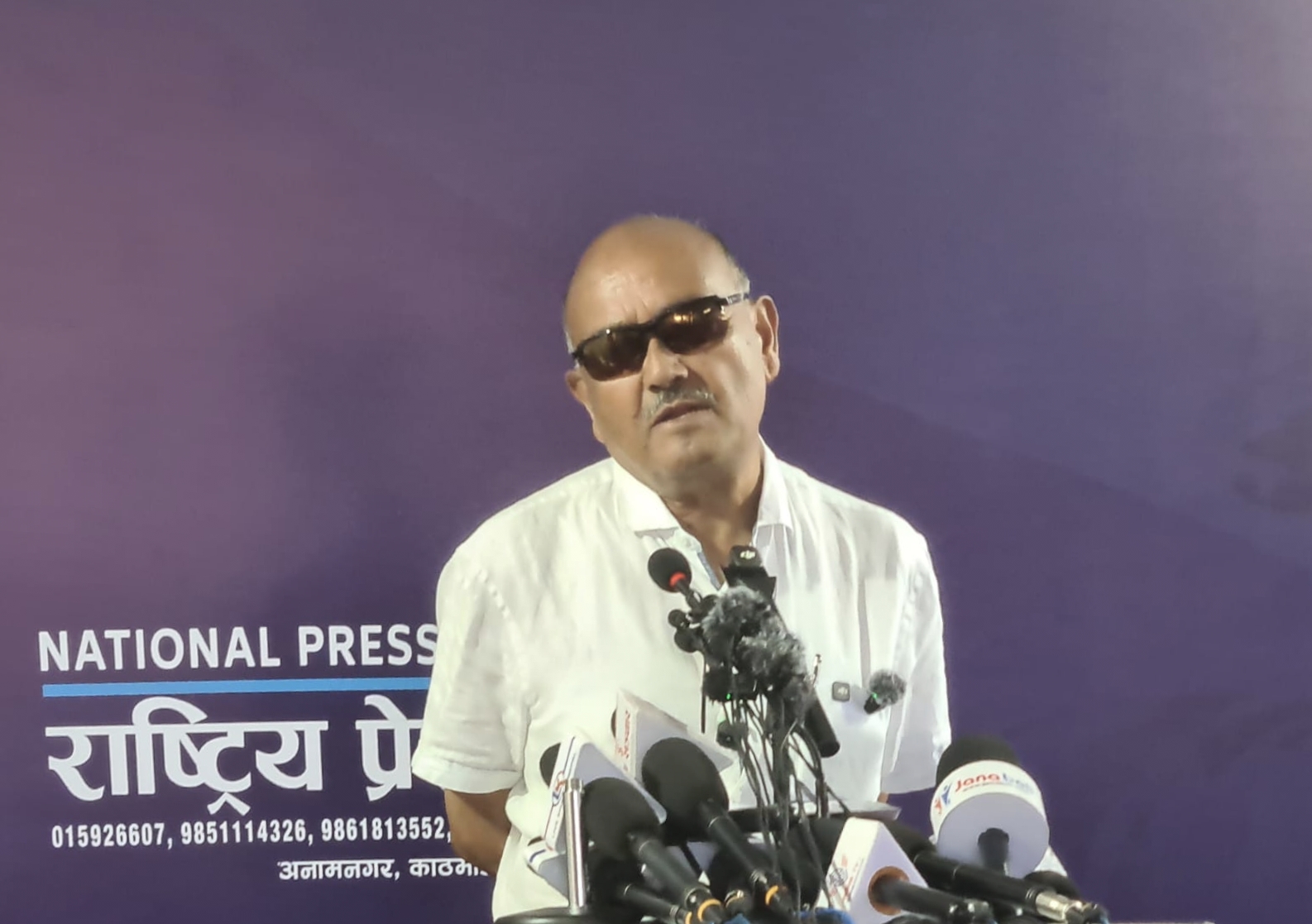
Mediabaaji.com Kathmandu, July 24. Analyst Prof. Dr. Surendra KC has said that "revision of character" is the main need of present Nepal rather than amendment of the constitution. Speaking at an interaction program held at the National Press Club,...

Government Returns Deposits to Cooperative Victims While Ignoring the Source of Funds, Opinion Article Claims
By Anusha Thapa ____
Bhaktapur . Nepal's cooperative sector has been facing a prolonged crisis for the past five years, with depositors reporting losses ranging from NPR 10,000 to as much as NPR 450 million in individual cases....

Unimplemented Genji Report Repression Recurred: Genji Agua Hamal
Kathmandu. Ravi Kiran Hamal, the leader of the Genji movement, met with the Commissioner of the National Human Rights Commission, Lily Thapa, and discussed in detail the implementation of the commission's report on the Genji movement, the state of...

Philosophical path of possessor ! the possession Philosophy !
© Nirmal Puri Bhogi
Mediabaaji.com Kathmandu, November 29. In the general sense, possession philo...