
Government Returns Deposits to Cooperative Victims While Ignoring the Source of Funds, Opinion Article Claims
-
Media Baaji

- Mon, 27 July 2026

By Anusha Thapa ____
Bhaktapur . Nepal's cooperative sector has been facing a prolonged crisis for the past five years, with depositors reporting losses ranging from NPR 10,000 to as much as NPR 450 million in individual cases. The government has declared several financially troubled cooperatives as problematic and has begun returning deposits to affected savers through the Problematic Cooperative Management Committee.
According to this opinion article, while the government has focused on refunding depositors, it has failed to examine the origin of the deposited funds. The author argues that authorities should verify whether the money came from legitimate business income, rental earnings, property sales, foreign employment, or other legal sources.
The article contends that reviewing the source of these deposits would help identify cases involving tax evasion, corruption, or illicit financial activity. It argues that individuals unable to explain the legal origin of their funds should face investigation under existing laws.
The author further claims that many cooperatives accepted large deposits without requiring proof of income or source of funds, creating opportunities for individuals to place undeclared wealth into the financial system. According to the article, stricter verification requirements could strengthen anti-money laundering efforts and increase government revenue.
The opinion piece criticizes regulatory bodies, including the Ministry of Land Management, Cooperatives and Poverty Alleviation and the Department of Cooperatives, alleging that weak oversight allowed cooperatives to invest heavily in Nepal's real estate market. When the property sector slowed, many cooperatives became insolvent, leaving depositors unable to access their savings.
The article also refers to allegations involving Sincere Saving and Credit Cooperative Limited in Putalisadak, Kathmandu. It states that complaints alleging the presence of illicit funds and tax evasion have been submitted to the Commission for the Investigation of Abuse of Authority and the Department of Money Laundering Investigation, but claims that no meaningful investigation has been conducted despite the passage of more than 41 months. These allegations have not been independently verified.
According to the author, the government should investigate the financial background of individuals receiving refunds from failed cooperatives rather than automatically returning deposits. The article argues that this approach would help identify undeclared income, improve tax collection, and discourage corruption.
The opinion piece also questions how some individuals were able to deposit amounts reportedly reaching NPR 450 million into cooperatives without being required to disclose the source of their wealth. It argues that similar disclosure requirements already apply to large deposits in commercial banks and should also be enforced in the cooperative sector.
The article expresses concern that failure to investigate suspicious financial activity could undermine Nepal's efforts to strengthen financial transparency and address international anti-money laundering standards.
In conclusion, the author argues that resolving the cooperative crisis should involve not only returning legitimate savings to depositors but also ensuring that authorities investigate potentially illegal wealth, tax evasion, and corruption. The article calls for stronger regulatory oversight, stricter financial disclosure requirements, and greater accountability from public institutions.
Note: This is an opinion article. The allegations, opinions, and conclusions presented above reflect the views of the original author and should not be interpreted as independently verified facts.
Express


Related News

Political interference: The main obstacle to sports development
© Madan Singh Bhatt
Sport is the creation of human life, where there is dialogue between body and soul.
Sports is not just about sweat, it is about willpower, discipline and self-respect.
But whe...

A mansion-like house, covered in gold jewelry, yet starving because there is no cooking gas!
Rusha Thapa
Bhaktapur. Four decades ago, Nepal was largely self-sufficient in almost everything. We had enough of our own food, timber and other necessities. Almost every person had farmland or some kind of land. People produced the grains a...

Common people and traders are not excited about the New Year, inflation and recession!
Rusha Thapa
Bhaktapur. The new year has begun. However, more than the excitement of the new year, there is concern among the common citizens. There is widespread talk about the market becoming more expensive in 2083. Common people say that t...
Financial Victims Have Been on the Streets for Months, While the Government Is Focused on Durga Prasai
Rusha Thapa
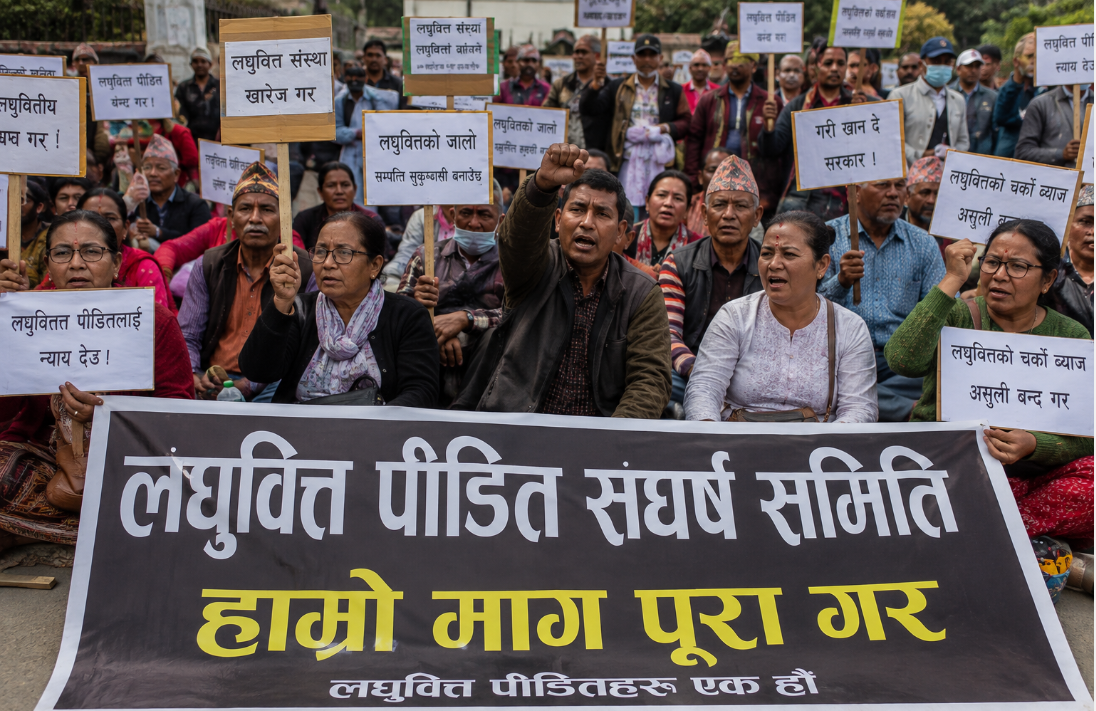
Bhaktapur. The protest of microfinance victims is still ongoing. For months, they have been staging sit-ins at the National Human Rights Commission and other government bodies, demanding justice. Their suffering has become unbear...
Loan Sharks Thrive Near Nepal's Power Center While Authorities Look Away
By Anusha Thapa_____
Bhaktapur, Nepal — Despite government claims that literacy and living standards have improved, thousands of Nepalis continue to fall victim to illegal loan sharks charging exorbitant interest rates. Critics argue...

Citizens Trapped by Debt, Government Sinking the Country Under Foreign Loans!
By Anusha Thapa
Over the past five years, cases of banking offenses in Nepal have risen sharply, with bounced checks and financial transaction disputes accounting for the majority. The primary reason behind this surge appears to be the prolo...