
Pesticides in rice eaten by the general public
-
Media Baaji

- Mon, 20 April 2026

Kathmandu. A study report has shown that pesticide residue was found in the rice consumed by the common people. About 83 percent of rice was found to have pesticide residues in the samples collected from different places. These results have come from a survey conducted on 120 commercial farmers of Mayadevi Rural Municipality and an interview conducted with 50 pesticide sellers and rice traders in the district.
The report also examined pesticide residue levels in rice samples collected from Kathmandu, Bhaktapur and Lalitpur. In the test, about 83 percent of the rice was found to contain some kind of pesticide residues, of which about 80 percent of the samples contained two or more types of pesticide residues. It has been mentioned that more and higher amount of residues were found in the samples of Kathmandu than other districts, while such residues were found more in Basmati rice. According to the report, the amount of pesticide residues ranged from 5.09 micrograms per kilogram to 312.54 micrograms per kilogram, while the average was 22.13 micrograms per kilogram.
While tricyclazole, thiamethoxam and tebuconazole are the most commonly found pesticides, the report expressed concern that banned and toxic substances such as aluminum phosphide and chlorpyrifos are still being used. However, the conclusion of the report is that there is no immediate health risk from eating rice with such residues. During the risk assessment, both the hazard quotient and the hazard index are less than 1, so it is said that the risk from consumption is not large in the current situation.
Express





Related News

The clouds in the valley have not yet opened, the pollution is more and more, it has become the third most polluted city in the world
Kathmandu. The weather has not opened in Kathmandu Valley for four days. The sun has not been shining for four days due to the foggy weather. Also, air pollution has increased. Air pollution has also started to increase as the weather has become c...

Kathmandu's pollution is still high, AQI has exceeded 200, people are asked not to go out of the house
Kathmandu. Air pollution in Kathmandu Valley is still high. Compared to the past few days, the pollution has increased even more. The sun was not shining in the valley since the 22nd of February. There is no wind. Due to the election, the traffic...
Doctor on the street against labor exploitation
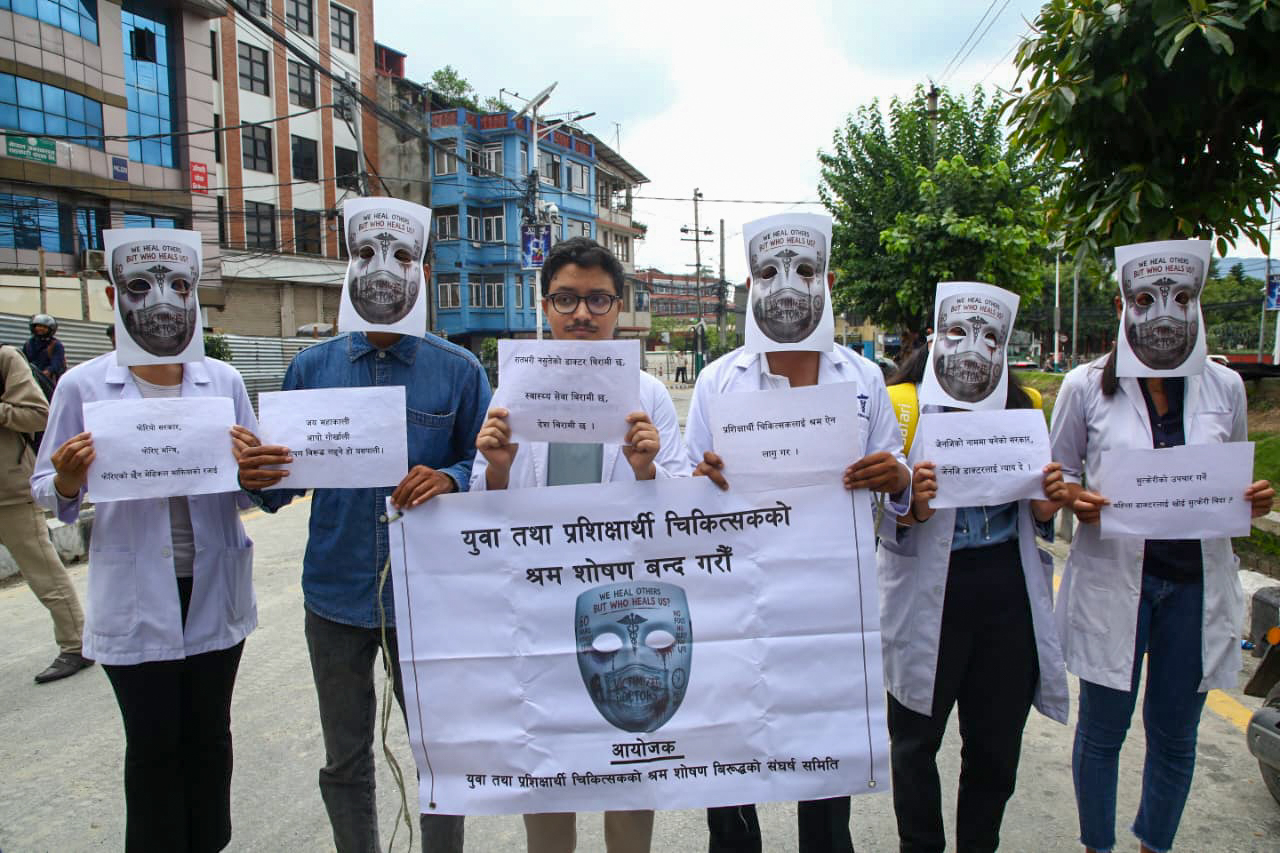
Kathmandu. Young and trainee doctors have demonstrated in Kathmandu demanding an end to labor exploitation, fair wages and a respectful work environment. During the demonstration, they carried placards with slogans such as 'Stop the labor exploita...

African Swine Fever Confirmed in Bangur, Urges to Be Vigilant
Kanchanpur. The infection of 'African Swine Fever' has been confirmed in Bangur reared in different places of Kailali and Kanchanpur. African swine fever has been confirmed by a technical test conducted after some time, high fever, blue and red sp...

Air pollution is increasing in Kathmandu, urge to be aware
Kathmandu. Air pollution has increased in Kathmandu Valley. The air quality index (AQI) which was 178 on Monday noon has reached 191 by noon today. This level falls under the 'unhealthy for all' category, which can especially affect children, the...