
Pesticides in rice eaten by the general public
-
Media Baaji

- Mon, 20 April 2026

Kathmandu. A study report has shown that pesticide residue was found in the rice consumed by the common people. About 83 percent of rice was found to have pesticide residues in the samples collected from different places. These results have come from a survey conducted on 120 commercial farmers of Mayadevi Rural Municipality and an interview conducted with 50 pesticide sellers and rice traders in the district.
The report also examined pesticide residue levels in rice samples collected from Kathmandu, Bhaktapur and Lalitpur. In the test, about 83 percent of the rice was found to contain some kind of pesticide residues, of which about 80 percent of the samples contained two or more types of pesticide residues. It has been mentioned that more and higher amount of residues were found in the samples of Kathmandu than other districts, while such residues were found more in Basmati rice. According to the report, the amount of pesticide residues ranged from 5.09 micrograms per kilogram to 312.54 micrograms per kilogram, while the average was 22.13 micrograms per kilogram.
While tricyclazole, thiamethoxam and tebuconazole are the most commonly found pesticides, the report expressed concern that banned and toxic substances such as aluminum phosphide and chlorpyrifos are still being used. However, the conclusion of the report is that there is no immediate health risk from eating rice with such residues. During the risk assessment, both the hazard quotient and the hazard index are less than 1, so it is said that the risk from consumption is not large in the current situation.
Express


Related News

Operation of TB search campaign with AI technology in Palpa
Kathmandu. A campaign to identify tuberculosis patients through artificial intelligence 9AI0 X-ray technology has been conducted in Purvkhola Rural Municipality of Palpa. In coordination with the district health office, camps were organized and te...

Today, International Health Day, a special program was held in Tundikhel
Kathmandu. Today, International Health Day is being celebrated with various programs. It is going to be celebrated formally for the first time after the United Nations announced this day on the initiative of Nepal. With the aim of promoting overal...

The government said to be alert and aware of Nipah virus
Kathmandu. The Ministry of Health and Population has said that the government has requested to be alert and vigilant against the Nipah virus. Making it clear that he is fully committed to protecting the health of citizens, he also said to avoid th...

Member Secretary of Nepal Health Research Council Dr. Joshi
Kathmandu. Dr. Pramod Joshi has been appointed as member secretary of Nepal Health Research Council. On Friday, he took the oath of office and secrecy before Health and Food Hygiene Minister Nisha Mehta. He has gained long experience in health res...

If the law is amended, Nepal can be made self-sufficient in medicine: Biplava Adhikari
Kathmandu. Biplava Adhikari, President of Nepal Drug Manufacturers Association, has claimed that Nepal can be self-sufficient in medicine within five years. Addressing a program on Nepal Pharma Expo and self-reliance in medicine, policy questions...
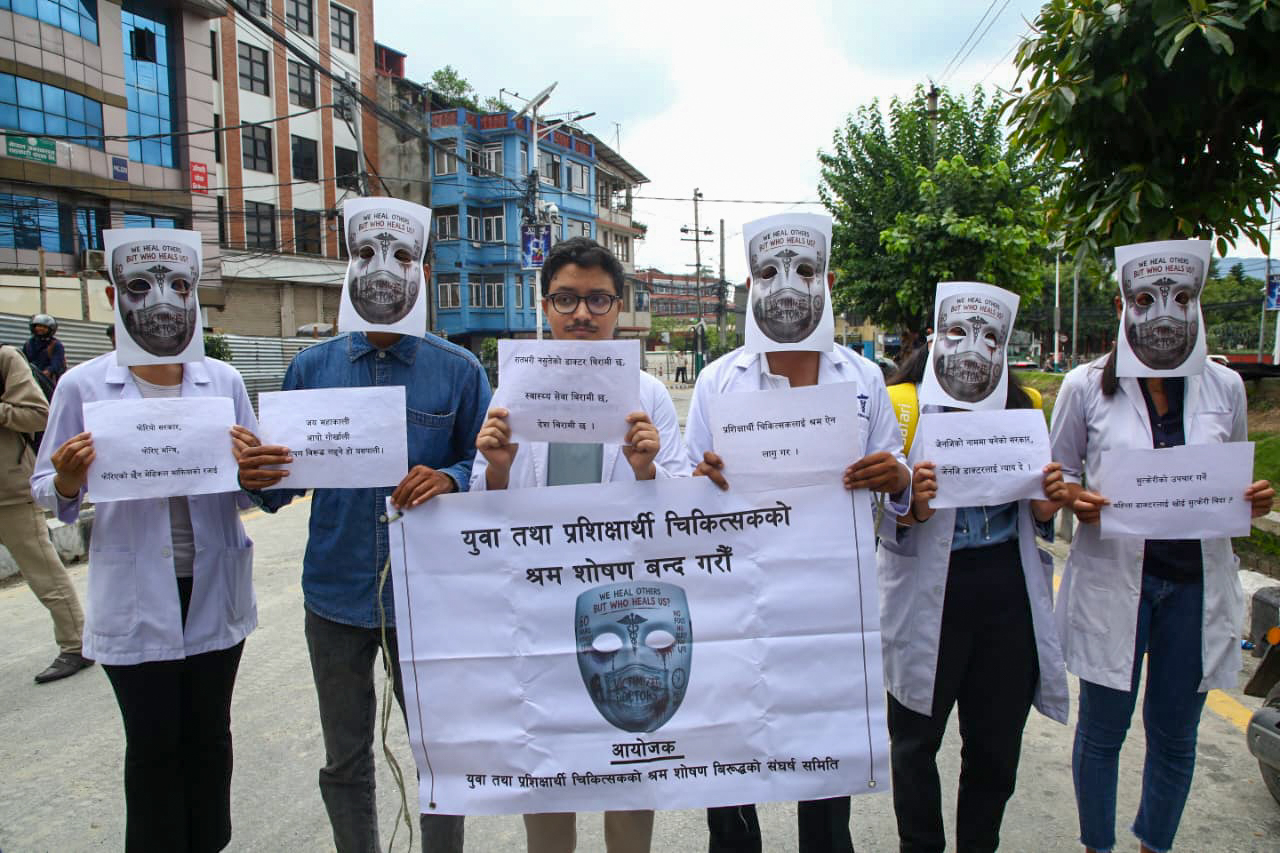
Doctor on the street against labor exploitation
Kathmandu. Young and trainee doctors have demonstrated in Kathmandu demanding an end to labor exploitation, fair wages and a respectful work environment. During the demonstration, they carried placards with slogans such as 'Stop the labor exploita...