
Homes Built Over Rivers: Residents Live in Fear Whenever It Rains
-
Media Baaji

- Sun, 1 November 2026

Rusha Thapa
Bhaktapur: Rivers, streams, traditional canals, wells, stone spouts, watermills, ponds, and lakes are natural water sources that either emerge from underground springs or collect and carry rainwater. However, many of these water bodies have been destroyed or encroached upon to construct houses and other structures. Across the country, allegations have emerged that land mafias, real estate brokers, government employees, and elected representatives have worked together to occupy public land and build structures over natural water channels.
Several examples illustrate the situation. A stream flowing from Narayanthan in Budhanilkantha, Kathmandu, has gradually been converted into a narrow canal. Its course can be traced through areas such as the Ring Road, Chundevi, Baluwatar, and Gairidhara. However, after reaching the northern entrance of Lampipakha, the stream disappears because houses have been constructed directly over it. Buildings have also been built over the same stream in areas such as Jai Nepal Hall, Kamaladi, and Bagbazar.
The stream becomes visible again near the office of Rastriya Samachar Samiti (RSS), from where it eventually joins the Bagmati River at Thapathali.
Another example is the Dhobikhola River. According to elderly local residents, until 2029 B.S., the river flowed as far as Ghatt ekulo Chowk, near the present-day compound of Singha Durbar. The area reportedly received its name from a watermill that once operated there. Today, Dhobikhola has also been reduced to a canal, while the traditional watermill has disappeared.
A third example of a major river being narrowed and encroached upon is the Hanumante River in Radhe Radhe, Bhaktapur. Elderly residents recall that the river once flowed through several areas, including Kamerot ar, Sallaghari Tin kune, Kharipati, Nikosera, Changa Ganeshthan, and Duwakot. They claim that much of the land in these areas originally belonged to the river. According to their allegations, land mafias and local representatives deepened the river channel and occupied the surrounding riverbank land.
On December 1, 2008, the Cabinet decided that buildings and other structures constructed near rivers must maintain a minimum setback of 20 metres. Later, on December 19, 2023, the Supreme Court ruled that a 40-metre setback must be maintained along the Bagmati, Bishnumati, and Manohara rivers. The government led by then Prime Minister KP Sharma Oli subsequently filed a review petition through the Office of the Attorney General. On January 18, 2026, the Supreme Court reversed its earlier ruling and restored the 20-metre setback requirement.
The rainfall on October 30 and 31 caused water levels in several rivers across the Kathmandu Valley to rise significantly. Residents living along the riverbanks became frightened as the water flow intensified. Many feared that their houses could be swept away, while some had already started preparing to relocate. Even in places where river water did not enter houses, residents complained that their toilets had become flooded. One contributing factor was the direct discharge of household sewage into rivers.
Earlier, heavy rainfall from September 24 to 27 also caused rivers across the Kathmandu Valley and other parts of the country to overflow. Similarly, the rainfall from October 3 to 5, 2025, and October 26 to 28, 2024, caused widespread damage and flooding.
Local residents recall that heavy rainfall in 1994–95 submerged several areas of Bhaktapur, including New Thimi, Radhe Radhe, Srijana Nagar, Sallaghari, and Chundevi. Flooding also occurred in these areas in 1998.
Until 1991, land in these areas reportedly remained extremely cheap, with some plots selling for as little as Rs. 30,000 per ropani. The reason was frequent waterlogging and muddy conditions throughout much of the year. Many plots were also classified as government-owned, Guthi, or unregistered public land. Radhe Radhe is even claimed by some locals to have been a wetland area.
In 2009, a 15-storey building was constructed in Radhe Radhe. However, the building remains under construction even today. Local residents also claim that the land on which it stands belongs to the government. In 2017, Bhatbhateni Supermarket was established directly in front of the building. Following its establishment, land prices in Radhe Radhe increased dramatically. Property prices reportedly reached Rs. 7.5 million to Rs. 10 million per aana.
Ironically, local residents have also alleged that Bhatbhateni itself was constructed on government-owned land. Nevertheless, the supermarket's establishment contributed to a sharp rise in property prices in the surrounding area.
Land mafias have allegedly exploited public resources for personal gain. In addition to destroying natural water sources, public and government-owned land, Guthi properties, unregistered public land, temples, forests, riverbanks, and properties belonging to the former royal family have reportedly been encroached upon. Even land within the country's main administrative centre, Singha Durbar, has faced allegations of occupation.
The question remains: When will the government take serious action against such encroachment?
Political leaders, party workers, businesspeople, and influential individuals have all faced allegations of collaborating with land mafias to occupy public property. Business figures such as industrialist Shekhar Golchha, Chandra Prasad Dhakal, and Bhatbhateni owner Min Bahadur Gurung have also faced allegations relating to the occupation of government land. Political leaders have similarly been accused of misusing public property and encroaching upon public land.
There had been considerable public expectations that the government led by Prime Minister Balendra Shah (Balen) would identify encroached public land across the country, reclaim it, and take strict action against those responsible.
Prime Minister Balen had previously earned public support through his efforts to protect public property and heritage sites. During his tenure as Mayor of Kathmandu Metropolitan City, his initiatives to protect government land and remove illegal encroachments attracted considerable attention. Many people were impressed by those efforts and supported his rise to the position of Prime Minister.
However, critics argue that the government's approach has changed since he became Prime Minister. They question whether the government is now moving away from its earlier commitment to protecting public land and instead distributing government property in the name of landless people for political support.
Successive governments after 1990 have also been accused of distributing public land to landless people for electoral benefits. Critics claim that some beneficiaries later sold the land or used it as collateral to obtain bank loans. When they failed to repay those loans and banks auctioned the properties, some reportedly returned to the streets, once again identifying themselves as landless.
This has created a recurring cycle in which governments distribute public land, beneficiaries sell or mortgage it, and some later return to demand further assistance as landless people. Critics argue that the current government must carefully examine this issue.
Instead of prioritising the identification and recovery of encroached government land, the government has been criticised for considering the distribution of some remaining public land in the name of landless communities. Critics warn that such decisions could further encourage land mafias and weaken public confidence in the protection of state property.
The government has also faced criticism over its response to alleged encroachment of Nepal's national territory by neighbouring countries. Concerns have been raised about Indian activities in areas including Kalapani, Limpiyadhura, and Lipulekh.
The article further makes historical claims about territories that Nepal has allegedly lost over time, including Darjeeling, Sikkim, Tinkar, Kangra, Teesta, Gorakhpur, Hajipur, Baghgham, and areas extending towards the Ganges River.
Many citizens had expected the Balen-led government to take diplomatic and political initiatives to reclaim Nepali territory allegedly encroached upon by neighbouring countries. However, Prime Minister Balen faced criticism after reportedly claiming in Parliament last May that Nepal had also encroached upon considerable Indian territory.
Critics argue that such statements, if made without sufficient evidence and historical verification, could create diplomatic complications and weaken Nepal's position on territorial disputes.
The situation highlights the serious consequences of irresponsible leadership, weak governance, and corruption within public institutions. When elected representatives fail to fulfil their responsibilities and government employees become driven by personal interests and financial gain, the country and its citizens ultimately bear the cost.
Express



Related News
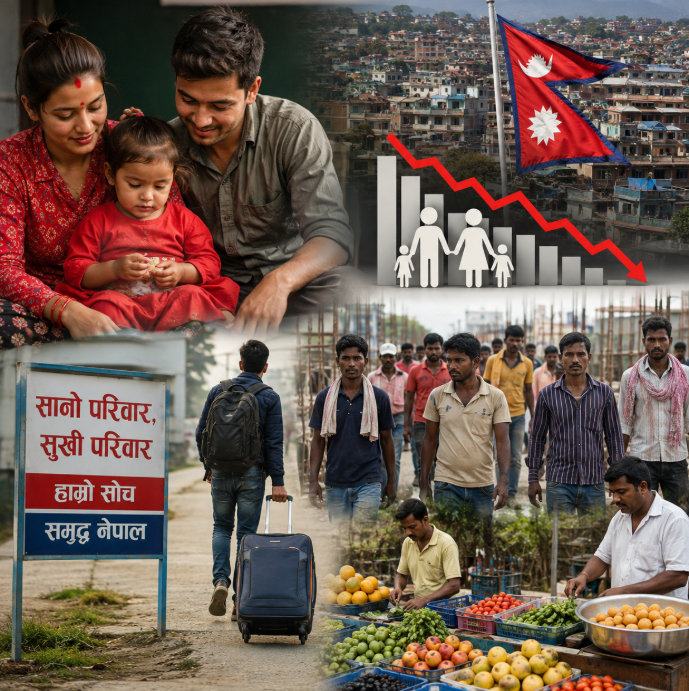
Nepal’s Birth Rate Declining, While Indians Increasingly Dominate the Market
Kathmandu. The government’s slogan has long been, “Small family, happy family.” Today, this slogan appears to have become a reality in many Nepali households. People are increasingly choosing not to have more than two children. Many have only one...
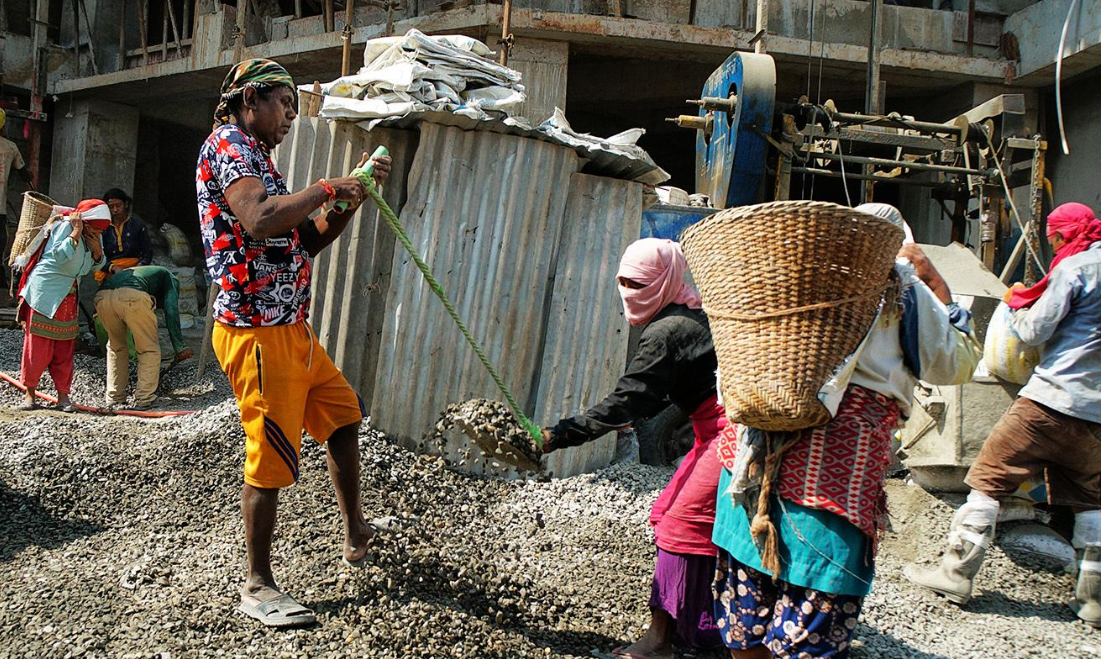
Government Employees and Elected Representatives Get Benefits Galore, While Private-Sector Workers Are Left Struggling
Anusa Thapa
Bhaktapur: The government has set the minimum monthly wage for private-sector workers at Rs. 21,500. According to government regulations, organ...

Government Returns Deposits to Cooperative Victims While Ignoring the Source of Funds, Opinion Article Claims
By Anusha Thapa ____
Bhaktapur . Nepal's cooperative sector has been facing a prolonged crisis for the past five years, with depositors reporting losses ranging from NPR 10,000 to as much as NPR 450 million in individual cases....

Political interference: The main obstacle to sports development
© Madan Singh Bhatt
Sport is the creation of human life, where there is dialogue between body and soul.
Sports is not just about sweat, it is about willpower, discipline and self-respect.
But whe...

Vehicles Being Turned into Advertising Platforms for Money, While the Government Looks On!
By Rusha Thapa
Bhaktapur: The law clearly states that public transport vehicles are not permitted to advertise products or services. However,...

Mother! Son, people never cry, right?
Suddenly, Baba did not feel well today. Yesterday, on the 15th of June, because he came to the field very wet, today Baba has a fever and is also coughing. I am the eldest son of the house, all the responsibilities are on my shoulders. I am the re...