
Nepal’s Birth Rate Declining, While Indians Increasingly Dominate the Market
-
Media Baaji

- Sat, 5 September 2026
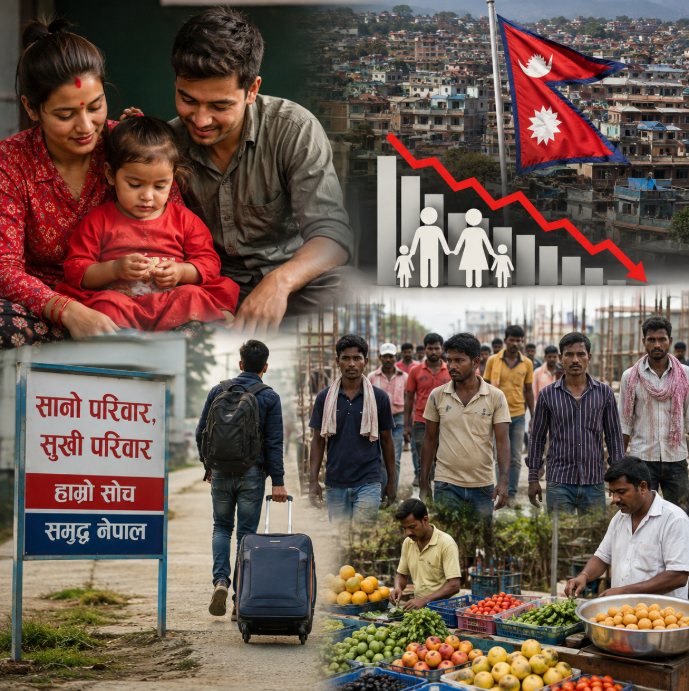
Kathmandu. The government’s slogan has long been, “Small family, happy family.” Today, this slogan appears to have become a reality in many Nepali households. People are increasingly choosing not to have more than two children. Many have only one child, while others have two. As a result, Nepal’s birth rate has been declining in recent years.
In the past, having many children was common in Nepal. People used to say, “May your children fill the hills and mountains” and considered children their greatest wealth. However, after 1990, this trend began to change. The government promoted the idea of having no more than two children and building a happy family. Over time, people started having fewer children. Today, many families have only one child, and even those children often do not remain in Nepal.
In recent years, the number of people marrying at a later age has increased. A trend of remaining unmarried has also emerged. Even among married couples, some choose not to have children. This is having a significant impact on the country’s population. While the birth rate continues to decline, the elderly population is increasing.
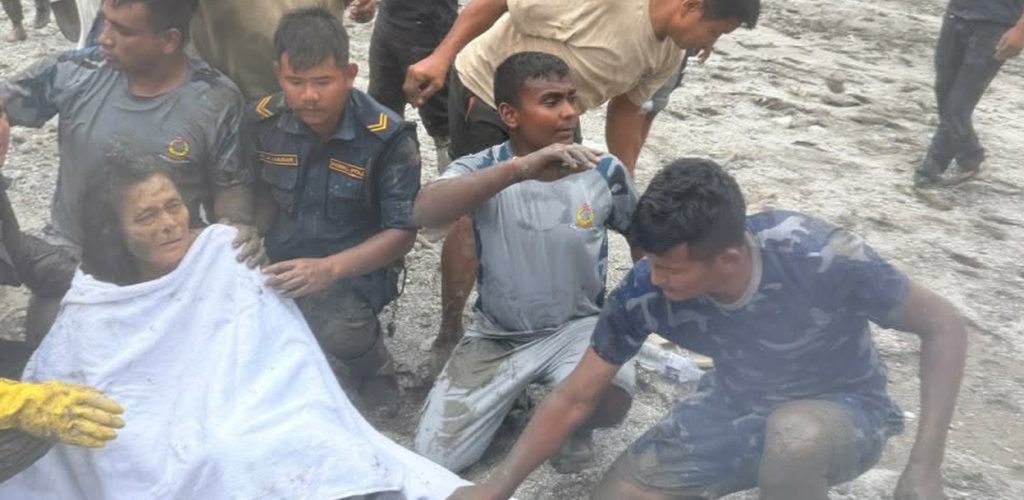
Nepal’s population is now facing a declining growth trend. At a time when people are having fewer children, deaths caused by floods, landslides, road accidents and other disasters are also reducing the population. More than 1,200 bodies have reportedly been recovered following the devastating flood that came through the Bhotekoshi area of Rasuwa. Dozens of people lose their lives in road accidents every day. Epidemics and diseases also claim lives. With the birth rate already declining, disasters, diseases and accidents are adding further pressure to Nepal’s population structure.
Many countries around the world have started introducing programs to encourage people to have more children. Nepal could also face a similar situation in the coming years if the declining birth rate is not addressed.
The government has set 20 as the legal minimum age for marriage. However, citizenship is available from the age of 16 and passports from the age of 18. Once they obtain passports, many young people leave the country for foreign employment or education. Most do not return permanently. Even those who return often reach an age at which they no longer consider marriage a priority.
This trend has affected Nepal’s population growth. Many people are also in prison, meaning that those who enter prison at a young age may miss opportunities for marriage and family life. According to the 2021 national census, Nepal’s population was 29,164,578. Some of those citizens have since renounced their Nepali citizenship and become citizens of other countries.
Many Nepalis who leave for foreign employment never return, while some lose their lives abroad due to illness, accidents or other circumstances. Others become involved in substance abuse or criminal activities, while some choose not to marry at all. These factors are contributing to the country’s demographic challenges.
Australia, for example, has attracted Nepali workers and students while also gaining skilled human resources. By bringing people from other countries and integrating them into its society and economy, Australia has strengthened its own workforce. This highlights the importance of human resources in national development.
Nepal has also seen many parents send their only children abroad. When those children become successful overseas, they often do not return. Parents may then find themselves alone during illness or old age. A family may invest years of money, time and effort in educating and raising a child, only to see that skilled human resource leave the country permanently.
India has not imposed the same kind of restrictions on family size, while China has changed its population policy over time. China previously enforced a one-child policy, but after concerns emerged over an ageing population and a shrinking workforce, it gradually moved toward encouraging larger families.
Some countries have introduced incentives, financial support and other benefits for families that have more children. Nepal, however, has yet to develop a comprehensive strategy to address its declining birth rate and changing population structure.
Political movements and social unrest can also result in the loss of young lives. The loss of even one child can cause enormous emotional and economic pain for parents, particularly when they have no other children. For elderly parents, the loss of their only child can also mean losing an important source of support in later life.
At the same time, as fewer Nepalis enter the workforce, foreign workers are becoming increasingly visible in Nepal’s markets and businesses. Indian workers are commonly seen in construction, workshops, fruit and vegetable shops, sweet shops, clothing businesses and street-food businesses.
Many sweet shops and street-food businesses are operated by Indian nationals. People collecting recyclable materials and scrap from homes and streets also include many Indian workers.
The situation raises an important question: if Nepalis are having fewer children, and many of those who are born are sent abroad, who will make up Nepal’s future workforce?
The state needs to seriously examine why young Nepalis are delaying or avoiding marriage and parenthood. Rather than simply encouraging people to have children, the government should create an environment in which families feel economically and socially secure enough to raise them.
The government could provide stronger support for education, healthcare and child development. Raising a child is expensive, and many families avoid having more children because they fear the financial burden. If the state can reduce those costs and provide better social security, more families may feel confident about having children.
People are one of a country’s greatest resources. Citizens contribute to the state through taxes and labor, while the country’s development depends on its human resources. A strong population is also important for national security and the protection of the country’s territory.
Therefore, Nepal needs a serious national discussion about declining birth rates, migration, marriage trends and the future of its workforce. Encouraging marriage and childbirth should go hand in hand with better education, healthcare, employment opportunities, social security and support for families.
Children are not merely a family’s future; they can also become the human resources that build a nation. Nepal’s history itself provides examples of siblings from the same family rising to the highest levels of national leadership, including Matrika Prasad Koirala, Girija Prasad Koirala and BP Koirala.
A growing attitude among young people is, “What have we gained by having children, and what will our children do for us?” This changing mindset is also influencing family decisions. Public figures and leaders who choose not to marry or have children can also influence social attitudes, particularly among younger generations.
Marriage and parenthood are personal choices, but the country’s declining birth rate has become a broader demographic issue. A child born today could become a doctor, engineer, entrepreneur, civil servant, soldier or even the country’s prime minister tomorrow.
Former Prime Minister KP Sharma Oli had previously emphasized the need for Nepalis to have children before going abroad while speaking about the country’s declining birth rate.
Nepal’s changing population structure requires immediate attention. If the government wants to increase the birth rate, it needs to create conditions where young people can marry, raise children and build a secure future without being forced to leave the country for basic economic opportunities.
The issue is no longer simply about how many children Nepali families have. It is about whether Nepal will have enough young people, skilled workers and citizens to sustain the country’s economy and development in the future.
Express




Related News
Rent, Water, Electricity, Garbage, and Parking: Landlords Overcharging Tenants as All Three Levels of Government Avoid Setting Fee Standards
Bhaktapur – The government has fixed the electricity tariff that consumers must pay. The Nepal Electricity Authority charges landlords Rs. 9.40 per unit, but many landlords reportedly charge tenants between Rs. 18 and Rs. 30 per unit, earning a pr...
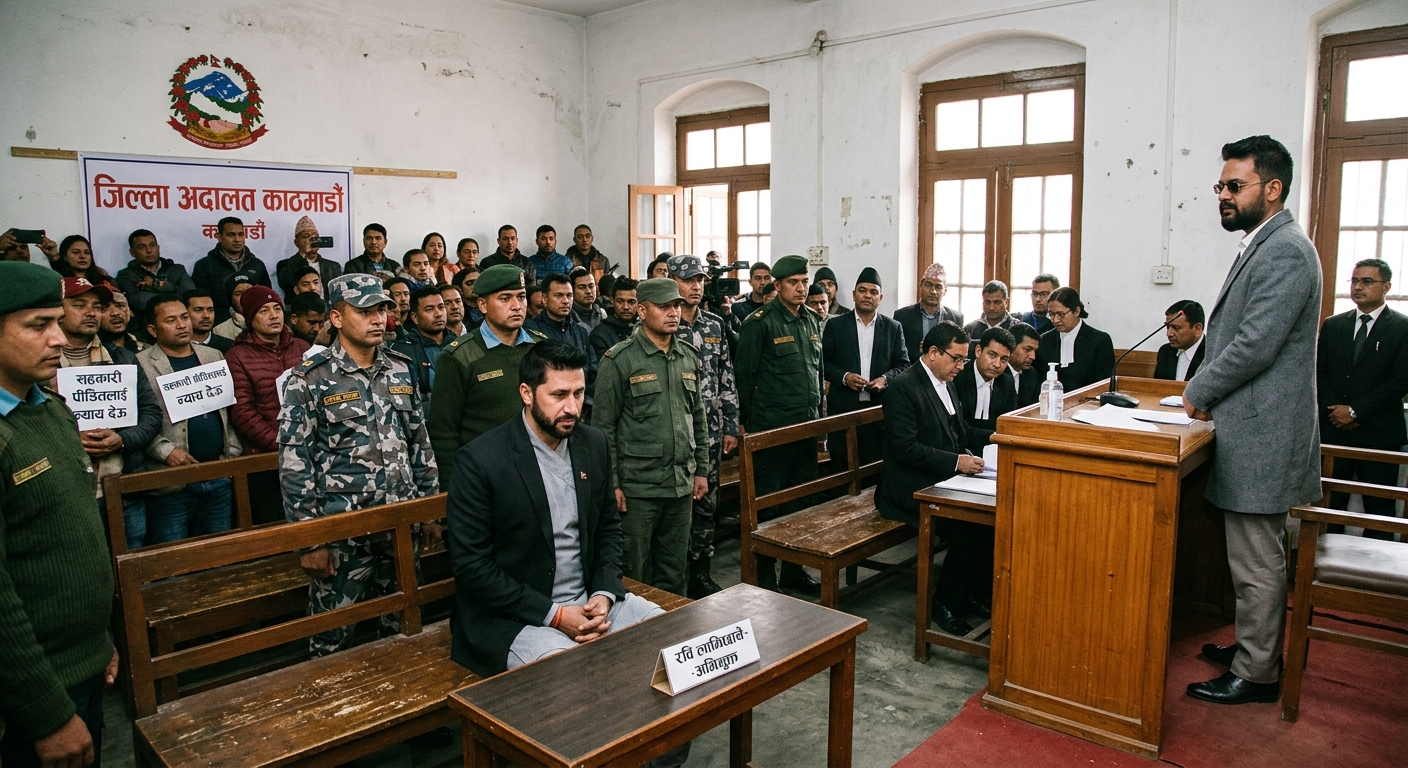
Ravi–Balen: They came to power by opposing the government, but now they are putting their opponents behind bars!
Rusha Thapa
Bhaktapur. It is said that the people we love the most are our parents, who gave us life, and our motherland. However, the number of Nepalis going abroad for employment or education and obtaining permanent residency or gre...

The struggles and unappreciated contributions of national players
Preface
The words of honor, identity and pride of the nation are not limited to the pages of history. Even today, they are born again and again in the playground. When a player sweats on the field carrying the nat...
Media Houses and Stationery Shops Are Sinking Newspapers: Journalists Don’t Search for News, and Stationery Shops Don’t Let People Read!
Anusha Thapa
Bhaktapur – People who are poor or financially struggling are no longer deprived only of healthcare and education—they are increasingly being denied access to newspapers as well. Many stationery shops refuse to let customers bro...

The day that Nepal will be blacklisted is approaching, Finance Minister Wagle on his own!
Rusha Thapa
Bhaktapur. Only eight months are left until the month of January. Within eight months, Nepal will be blacklisted without leaving the graylist. It has been a month since the formation of the RSVP government led by Wale...

Citizens Trapped by Debt, Government Sinking the Country Under Foreign Loans!
By Anusha Thapa
Over the past five years, cases of banking offenses in Nepal have risen sharply, with bounced checks and financial transaction disputes accounting for the majority. The primary reason behind this surge appears to be the prolo...