
Government Employees and Elected Representatives Get Benefits Galore, While Private-Sector Workers Are Left Struggling
-
Media Baaji

- Tue, 25 August 2026
Anusa Thapa
Bhaktapur: The government has set the minimum monthly wage for private-sector workers at Rs. 21,500. According to government regulations, organizations, hotels and restaurants, households, shops and other employers are required to provide workers with at least this minimum wage. Workers are also entitled to public holidays, working hours from 10 a.m. to 5 p.m., medical expenses, festival advances and other facilities.
Employees who work beyond regular office hours are also supposed to receive overtime pay. However, these provisions have largely failed to be implemented in practice. While the minimum wage for private-sector workers was set five years ago, the salaries of government employees have been increased in the current fiscal year. Through the budget for fiscal year 2083/84, government employees received a 21 percent salary increase, while the monthly dearness allowance remained unchanged at Rs. 5,000. As government employees’ salaries increase, the salaries and allowances of elected representatives also rise automatically.
Has the cost of living not increased for private-sector workers as well? Why this discrimination? Can the government increase the salaries of public employees while ignoring private-sector workers?
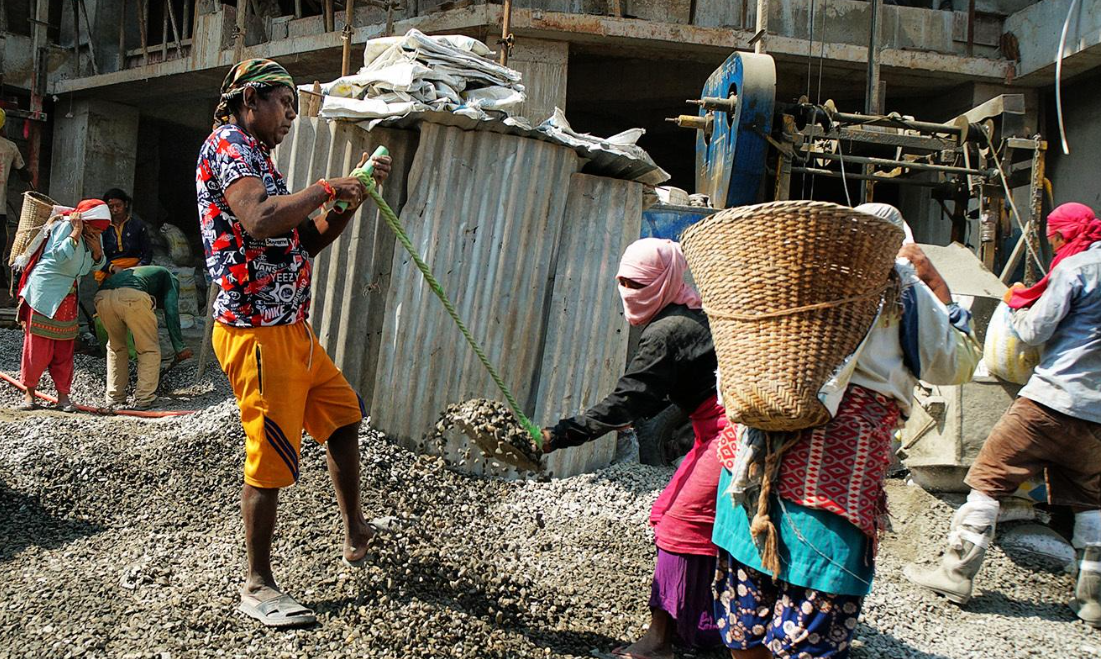
Although the minimum wage has been fixed at Rs. 21,500, many private-sector workers are still forced to work for extremely low wages. Some work throughout the month for as little as Rs. 5,000 to Rs. 15,000. They often receive neither public holidays nor the other facilities guaranteed by the government.
Employers have also used the excuse of the economic slowdown to delay workers’ salaries for months. Media houses themselves are an example. Many journalists have not received their salaries for long periods. Although wages have not increased in the past five years, the cost of living, room rents and transportation fares have all risen. The government has neither increased their wages nor taken effective action against employers who fail to provide the legally mandated minimum wage.
It appears that the government considers only public employees and elected representatives as people who deserve protection. Does it think private-sector workers do not need to eat or pay rent? The cost of living has risen for private-sector workers just as it has for government employees. Everyone pays the same prices for basic goods and services. Yet there is state-sanctioned discrimination when it comes to wages.
Only 45 days remain until Dashain this year. Since the government led by Balendra Shah came to power, market prices have soared. Prices have already started rising sharply, while black-market activities have begun and market monitoring remains almost nonexistent.
Once again, there will likely be attempts to increase transportation fares during Dashain. Even on routes where the regular fare is around Rs. 500, transport operators often charge as much as Rs. 1,000 during the festival season. On top of that, the government may approve another fare increase.
Meat prices have also become unaffordable. Under the pretext of bird flu affecting chickens, the price of goat meat has reportedly risen to as much as Rs. 1,900 per kilogram. During Dashain, it could reach Rs. 2,500. How are ordinary people supposed to celebrate the festival? Goats may be purchased from farmers for around Rs. 500 per kilogram but sold to consumers for as much as Rs. 2,500. Who is responsible for monitoring this?
Landlords increase rents almost every month. If tenants protest, they are simply told to move out. Poor people are being squeezed from every direction. Those with weak financial conditions are increasingly finding it difficult to survive in the country. As market prices continue to rise, the agencies responsible for monitoring them appear to be doing little. After all, government employees have already received salary increases. Allegations of corruption and bribery also persist. Whether ordinary people are exploited or go hungry seems to make little difference to those in power.
People are even walking because they cannot afford transportation fares. Meanwhile, the government has allowed official vehicles to be converted to private license plates. This could increase the misuse of government vehicles. Even when vehicles carried government plates, some employees were accused of misusing them; changing the plates could further encourage such practices. Fuel is paid for with taxpayers’ money, yet government vehicles with private plates may be used for personal purposes.
The public bears the tax burden while elected representatives and government employees enjoy increasing benefits. Those who pay taxes are left with little in return. Private-sector workers cannot even receive wages that correspond to their labor.
Current and retired government employees receive various medical benefits. They also receive festival allowances, clothing allowances, dearness allowances and other facilities. Private-sector workers, however, have to pay for medical treatment out of their already inadequate wages when they fall ill.
In the name of democracy, the system appears to have benefited politicians and government employees more than ordinary citizens. Employers continue to prosper while workers struggle even to put food on the table. Dashain is approaching, yet the government has not taken sufficient steps to ensure affordable and safe transportation for people returning home. Once again, ordinary citizens are likely to risk their lives while traveling during the festival season. They face both expensive fares and unsafe journeys.
The government should immediately carry out widespread market monitoring. But even that has not happened effectively. Poor citizens are increasingly being pushed into a situation where they may have to give up celebrating festivals.
Political parties came to power by raising slogans in favor of the poor and workers. The film industry has also produced countless stories about poverty and labor. Yet the poor remain poor. Others have benefited in the name of the poor, while the problems faced by ordinary citizens remain unchanged.
The rich exploit the poor, and the state also places burdens on them. Political leaders claim that democracy has arrived in the country. But for whom has democracy arrived? It appears to have benefited political leaders and government employees more than ordinary citizens.
The rich are becoming richer while the poor are becoming poorer. Many poor people are struggling simply to survive. They cannot afford adequate food or medical treatment.
In India, people receive ration cards that provide discounts on essential goods. Some countries provide unemployment benefits. But what support does Nepal provide? Rich and poor alike often pay the same market prices for goods, despite having vastly different incomes. There is little meaningful relief for the poor.
Politicians have repeatedly promised support for unemployed citizens. Mahesh Basnet, a UML leader, even established the National Youth Association while promoting the issue of unemployment benefits. He later became a lawmaker and minister. But where are the promised unemployment benefits? How many unemployed citizens have actually received such assistance?
Every election cycle, citizens are promised various forms of relief, only for politicians to use those promises to gain power. The people must recognize this pattern. The country has reached its current state due to failures in political leadership and the public administration.
Citizens pay taxes, while those in power allegedly benefit from those resources through various means. The public continues to bear the cost of maintaining their salaries and facilities.
Now is the time not merely to become members of political parties, but to become citizens who stand up for their own rights. People must speak for themselves. Political leaders and government officials have already pushed the country into a difficult situation. Until citizens open their eyes and demand accountability, the exploitation of ordinary people will continue.
Express


Related News

The struggles and unappreciated contributions of national players
Preface
The words of honor, identity and pride of the nation are not limited to the pages of history. Even today, they are born again and again in the playground. When a player sweats on the field carrying the nat...

Mother! Son, people never cry, right?
Suddenly, Baba did not feel well today. Yesterday, on the 15th of June, because he came to the field very wet, today Baba has a fever and is also coughing. I am the eldest son of the house, all the responsibilities are on my shoulders. I am the re...

Health Insurance in Nepal: When the Wealthy Benefit, the Poor Are Left Behind
Rusha Thapa
Bhaktapur, Nepal — Illness has become a common reality in almost every household. Diseases such as gastritis, diabetes, and hypertension are now widespread, while more serious conditions like cancer, kidney disease, heart d...

Civil Servants Themselves Causing Loss to the Nation While the Government Remains a Spectator
By Rusha Thapa
Bhaktapur – Around two decades ago, the Transport Management Service Office was established near Sallaghari Threekune Chowk in Bhaktapur. Operating under the Ministry of Transport of Bagmati Province, the office has been funct...
Nepal’s Birth Rate Declining, While Indians Increasingly Dominate the Market
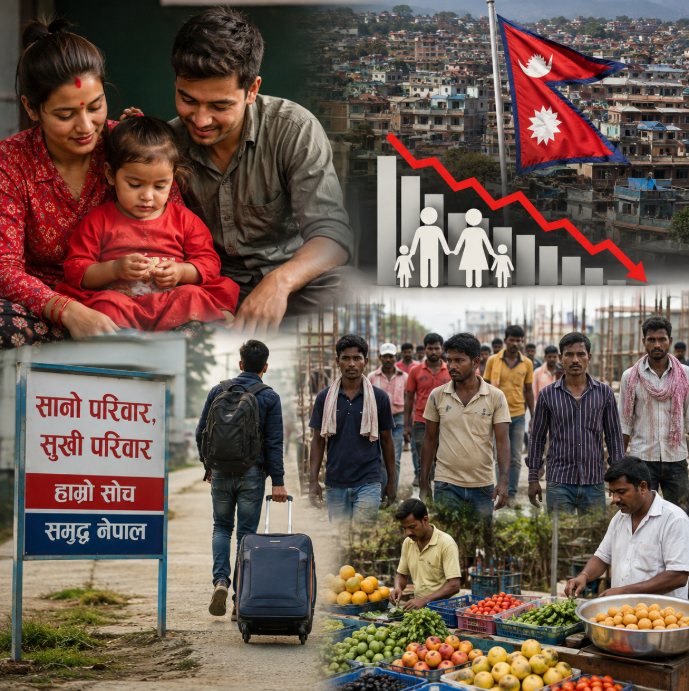
Kathmandu. The government’s slogan has long been, “Small family, happy family.” Today, this slogan appears to have become a reality in many Nepali households. People are increasingly choosing not to have more than two children. Many have only one...

Political interference: The main obstacle to sports development
© Madan Singh Bhatt
Sport is the creation of human life, where there is dialogue between body and soul.
Sports is not just about sweat, it is about willpower, discipline and self-respect.
But whe...