
Citizens Trapped by Debt, Government Sinking the Country Under Foreign Loans!
-
Media Baaji

- Sat, 13 June 2026

By Anusha Thapa
Over the past five years, cases of banking offenses in Nepal have risen sharply, with bounced checks and financial transaction disputes accounting for the majority. The primary reason behind this surge appears to be the prolonged economic slowdown. The market has been suffering from recession-like conditions, businesses are struggling, and many cooperatives have collapsed. As a result, borrowers who can no longer repay their loans are increasingly facing legal action under banking offense laws.
Five years ago, the real estate, stock market, and automobile sectors were booming. The value of collateral was constantly rising. Property worth NPR 10 million could be worth NPR 30 million just a year later. Borrowers often transferred collateral from one bank to another, taking out new loans to settle previous debts. Others sold assets, repaid loans, and kept the remaining profit.
Today, however, collateral values have been steadily declining. Property once valued at NPR 10 million has dropped to around NPR 6 million. Even when owners are willing to sell at discounted prices, buyers are difficult to find.
To pay bank installments, many borrowers have turned to private lenders. Banks have seized their collateral, yet their private debts remain unpaid. Consequently, they face legal disputes as well. When borrowers issue promissory notes and checks that later bounce, creditors often file complaints with the police, resulting in banking offense cases. Thus, ordinary citizens are not only losing their assets but also ending up in prison.
Those who borrowed from banks to buy houses, vehicles, or stocks are among the hardest hit. Real estate traders report that properties worth NPR 30 million five years ago struggle to find buyers even at NPR 8 million today.
Similarly, stock prices have fallen significantly. Shares once sold at NPR 3,200 to NPR 4,500 are now trading around NPR 2,700. Demand for privately owned vehicles has weakened considerably. Although gold prices reached nearly NPR 400,000 per tola a few months ago, many jewelers are reluctant to buy gold, often telling sellers to look elsewhere because they lack cash.
Business owners say they merely open their shops without making any meaningful sales. Depositors of cooperatives, microfinance institutions, and finance companies have been waiting for years to recover their savings. Some had invested hundreds of thousands or even millions of rupees, yet now struggle to pay rent. Neither thir principal nor interest has been returned.
Every day, social media and newspapers are flooded with advertisements for cheap real estate. Bank auction notices are equally common. Many people who borrowed money to invest in property, vehicles, or shares have landed in prison. Some have fled the country, while others are living in hiding. Unable to cope with financial and mental pressure, some have even taken their own lives.
The government refunded deposits to cooperative savers with balances below NPR 10,000. Those with larger deposits were told they would be repaid after the assets of cooperative operators were sold. But who is going to buy those properties? Land that struggles to sell for a few thousand rupees per anna was previously divided and sold for hundreds of thousands or even millions.
At a time when ordinary citizens are struggling to afford daily meals, who would invest in real estate? Investing in the stock market now feels like self-destruction to many, as prices continue to decline. Likewise, few people are willing to invest in vehicles.
People have become more cautious, realizing that markets do not always rise indefinitely. They now understand that borrowing money to invest in these sectors can ultimately lead to financial ruin and even imprisonment.
The real estate brokerage industry has already seen a mass exodus. Brokers who once crowded land revenue and transport offices have largely disappeared or shifted to other professions.
Cases involving stock broker Deepak Bhatt and businessman Sulabh Agrawal are expected to expose vulnerabilities within numerous banks. There is growing speculation that several bank CEOs could also face legal consequences. The Smart Telecom scandal may similarly lead to imprisonment for many individuals.
Banks and financial institutions are accused of providing loans ranging from NPR 1 billion to NPR 75 billion to single individuals, allegedly in exchange for bribes. Various forms of land—including government, public, unregistered, trust-owned, excess-limit, royal-family, and industrial properties—were reportedly accepted as collateral.
The government has already begun efforts to reclaim public assets and has recently decided to implement the recommendations of the Rawal Commission.
Critics argue that banks, in pursuit of profits and illicit gains, have put depositors at risk. Under Nepalese law, individuals who fail to repay loans may face imprisonment. While banks can recover funds through collateral auctions, more than 500,000 borrowers have already been blacklisted. Blacklisted individuals lose access to various government services, and their children may face restrictions in obtaining certain opportunities, including foreign travel and access to public resources.
According to available figures, around 6.3 million people have taken loans from cooperatives, 2.7 million from microfinance institutions, and 2.2 million from banks. In addition, millions have borrowed from informal moneylenders.
Although the law prohibits charging interest rates above 10 percent, critics allege that banks effectively charged rates as high as 80 percent through fees, service charges, and other mechanisms. Private lenders reportedly charged between NPR 5,000 and NPR 30,000 in interest per NPR 100,000 loaned. Such high interest burdens pushed many borrowers into financial collapse and, eventually, legal trouble.
Many had hoped that after the arrival of the Balen government, cooperative savings would be returned, the property market would revive, and the stock market would recover. However, these expectations have not materialized.
People want to sell assets, but few are willing to buy. Those with money have withdrawn it from banks and kept it at home. Those without money cannot purchase assets regardless of how low prices fall.
The government's budget for the upcoming fiscal year appears likely to further reduce tax revenue. Critics claim the budget was prepared without adequate planning and that government employee salaries were increased without identifying sustainable sources of income.
Within just three months of taking office, the Balen government is said to have borrowed more than NPR 300 billion in foreign loans, while previous governments had already accumulated approximately NPR 3.2 trillion in debt.
The Gen-Z protests of Bhadra 23 and 24 reportedly caused NPR 84.77 billion worth of damage to government property and NPR 2.7 trillion in damage to private property. Rebuilding these structures could cost even more.
Meanwhile, the government has yet to settle payments amounting to NPR 45 billion owed to contractors, NPR 43 billion for health insurance claims, NPR 24 billion related to COVID-19 expenditures, and NPR 7 billion owed to dairy farmers. Many have been waiting for years to receive these payments.
If Nepal fails to exit the FATF grey list by Magh 2083, there are concerns that it could be placed on the black list. Such a move could severely affect foreign aid, international financial transactions, and the ability of Nepalis to engage in global economic activities.
Government revenue collection has weakened significantly. In this situation, critics question how the state will continue to fund its expenditures. They ask what concrete plans the government has for economic recovery.
According to the article, for every NPR 100 collected in revenue, NPR 56 must be used to repay foreign debt. This leaves only NPR 44 to cover development projects, public services, and other government obligations.




Related News

The Finance Minister Himself Is Trying to Drown the Public: Think Carefully Before Investing in the Stock Market!
By Rusha Thapa
Bhaktapur. According to the law, no person or business is allowed to make a profit of more than 20 percent of the production cost of any goods or services. In other words, a product that costs Rs. 100 to produce can be sold fo...

Rising Unemployment Leaves More Young People Unmarried, While Pensioned Employees Continue Marrying Even in Old Age
Rusha Thapa
Bhaktapur, In recent times, many young people have chosen not to enter into marriage because of unemployment. Even those who have jobs often do not want to marry because their income is insufficient. Since they find it difficult...
Question to the Land Minister: When Will Lease Agreements Granted at Throwaway Prices Be Revoked and Encroached Government Land Be Recovered?
By Rusha Thapa
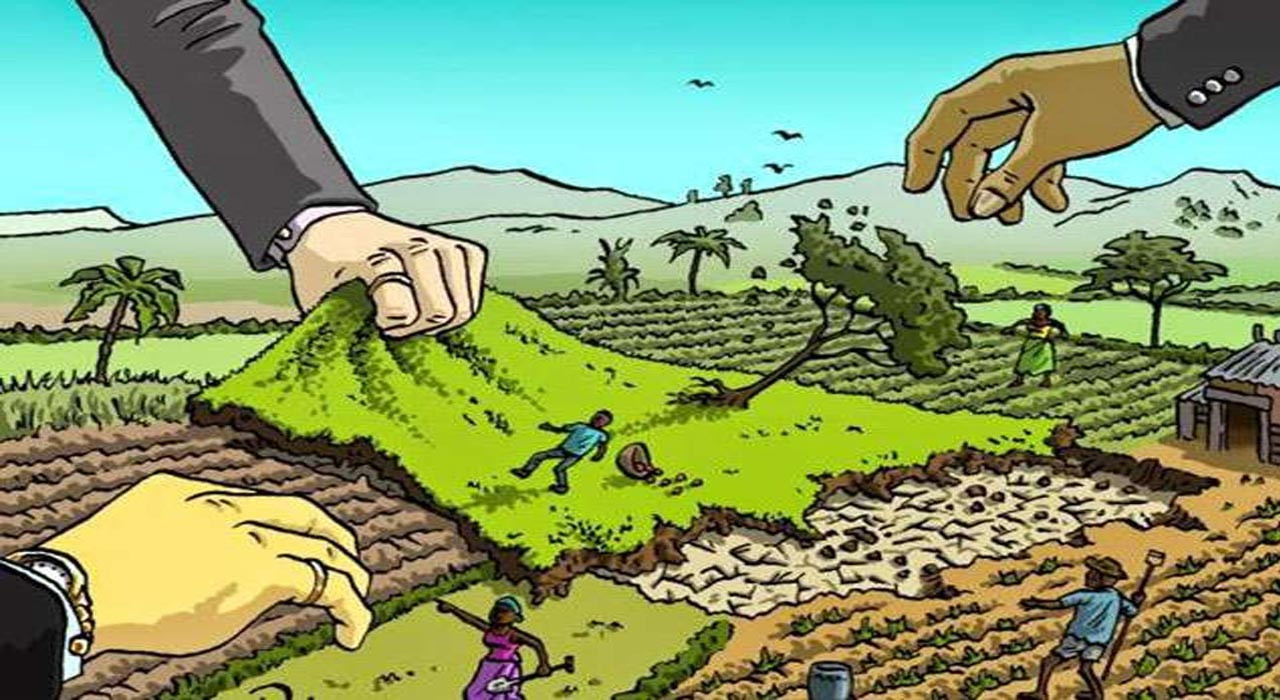
Bhaktapur: During the tenure of previous governments, a large amount of government land was either registered in the names of private individuals or illegally occupied. Public land, Guthi land, unregistered public land, land e...
Nepal's intellectual property: Now is the time to own knowledge, not to sell knowledge
In the discussion of development, Nepal counted a lot on roads, bridges, airports, hydropower and foreign investment. But now it's time to ask another question—what is the value of Nepal's knowledge? We have mountains, herbs, biodiversity, origina...

Education, Sports and Entrepreneurship: The Foundation of a Prosperous Society from Responsible Youth
mediabaji.com Kathmandu October 30 The youth of Nepal today is at a decisive moment in history. Despite the lack of opportunities in the country, the attraction of foreign employment and political instability, some young...

Government Employees Enjoy Benefits While the State Struggles, Public Faces Growing Financial Despair
By Rusha Thapa______
Bhaktapur_ The Government of Nepal continues to provide monthly pensions to retired civil servants, with payments typically deposited into beneficiaries' bank accounts before the 10th of each month. Depending on t...