
Two Laws Under One Government: Banks Can Charge Any Interest They Want, Individuals Face Jail
-
Media Baaji

- Fri, 17 July 2026
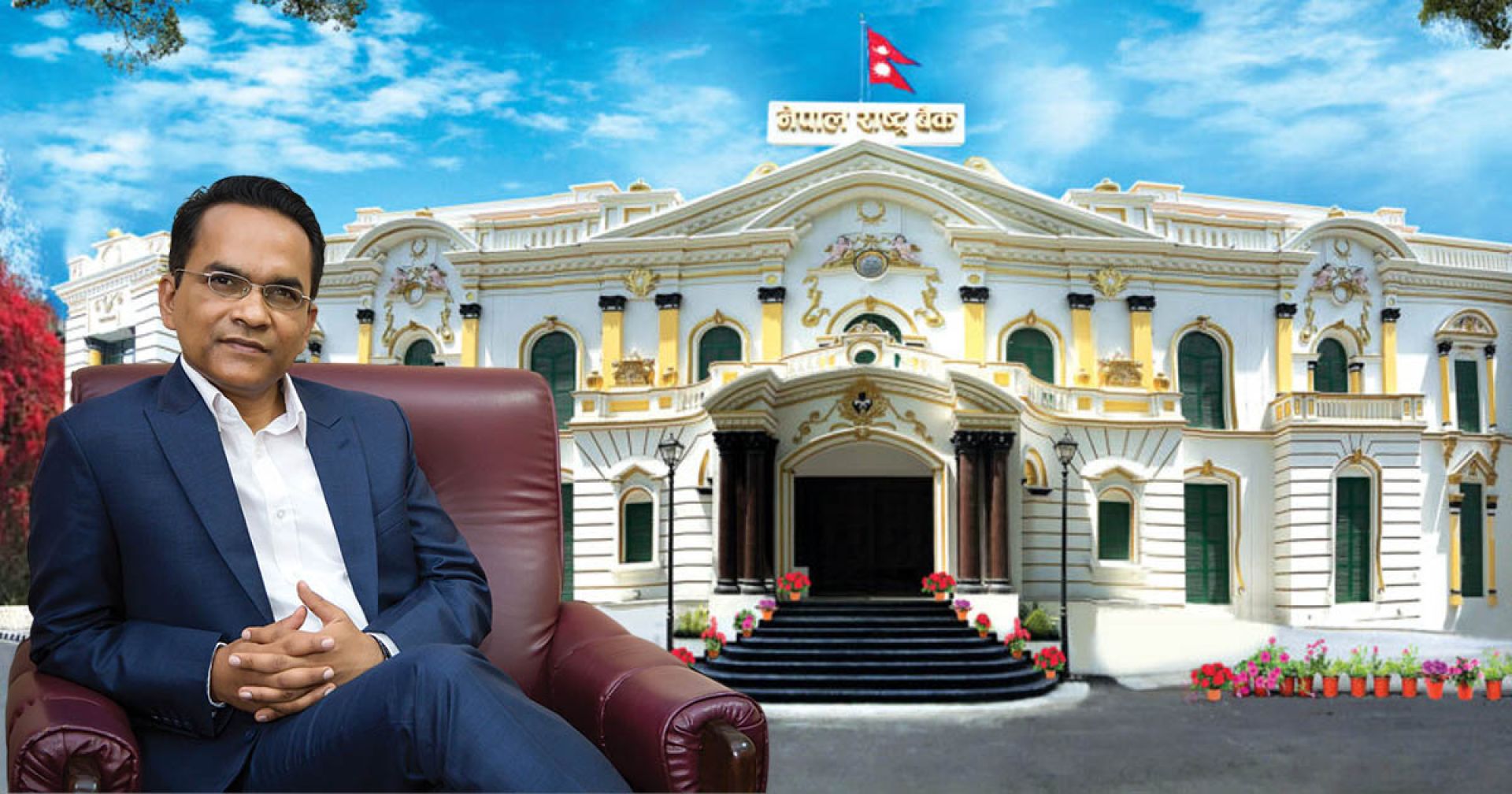
By Anusha Thapa
One government, but two different laws. The issue is interest rates. The government allows banks and financial institutions to determine their own interest rates. Banks, finance companies, cooperatives, and microfinance institutions can set their own lending rates. However, individuals are subject to a government-imposed limit: they cannot charge more than 10% interest. Anyone charging above 10% is labeled a loan shark and can face imprisonment and legal punishment.
Banks and financial institutions, meanwhile, charge service fees of up to 3%. They often lend only NPR 10 million against collateral worth NPR 30 million. It is alleged that borrowers are sometimes forced to pay large unofficial payments (bribes) to obtain loans. If a borrower misses just three installments, the bank can seize the collateral.
Loans are renewed year after year, allowing banks to continue collecting money. Borrowers are often required to insure their collateral, generating commissions for banks. Compound interest is also charged, and in some cases borrowers reportedly end up paying interest amounting to as much as 80% of the principal. Under the banner of a free-market economy, banks and financial institutions have effectively been given the freedom to exploit borrowers. While many individuals have gone to jail for charging interest above 10%, banks continue operating without facing similar scrutiny.
A few days ago, 35-year-old Vivek Mandal died after setting himself on fire following the auction of his family's property by a bank. His family had mortgaged their land to finance his education, leading him to earn a Bachelor of Science degree. When they could no longer repay the loan, the bank auctioned the property. Unable to bear the loss, he chose self-immolation and later died while undergoing treatment.
According to the article, thousands of people have taken their own lives because of debt-related pressures from banks and financial institutions. Several years ago, a tragic incident occurred in Nikosera, Bhaktapur, where a man allegedly killed his wife, his son who had completed an LLB degree, and even the family dog after the bank auctioned his house, before taking his own life. Another family reportedly jumped into the Trishuli River. Despite these incidents, the article argues that there has been little investigation and no meaningful accountability for banks.
The author claims that banks have turned hundreds of thousands of citizens into landless people and reduced once-wealthy families to poverty. Institutions accused of exploiting the public continue operating openly around Singha Durbar and Baluwatar, while the government allegedly turns a blind eye. Respectably dressed bankers, the article says, continue profiting at the expense of ordinary citizens.
Meanwhile, Home Minister Sudhan Gurung has traveled to Nijgadh, Bara, to meet victims of illegal moneylenders. The author questions why the government responds to victims of private loan sharks while ignoring those affected by banks and financial institutions. If victims of banks seek justice, where should they go?
The article further alleges that businesses near Singha Durbar lend NPR 100,000 and collect NPR 1,250 over just 95 days. Some lenders reportedly charge monthly interest ranging from NPR 5,000 to NPR 30,000 per NPR 100,000 loan. Many of these lenders are said to include jewelry and hardware shop owners. The author argues that it is political theater for the government to focus only on illegal moneylenders while ignoring what is happening in its own backyard.
The article calls on the government to regulate bank interest rates, prohibit excessive service charges, stop mandatory collateral insurance, and ban excessive penalty fees.
The author also criticizes the Nepal Rastra Bank's recently announced monetary policy, which allows banks to provide loans covering up to 80% of the value of shares, vehicles, and real estate. According to the article, this reflects a double standard. Companies issue shares at a face value of NPR 100, but market prices have risen to around NPR 2,500. The policy allows loans based on these inflated market values, which the author argues exposes the public and depositors to unnecessary financial risks.
The article further argues that property prices are falling, vehicle values depreciate after purchase, and encouraging lending in such sectors could create serious financial instability. It contrasts Nepal with some developed countries, claiming that depositors may pay fees to banks for safeguarding their money, while governments maintain better oversight of citizens' incomes, expenses, and land ownership.
According to the author, Nepal's banking system encourages people to live off interest income while banks profit by charging borrowers high rates. Although investment opportunities are limited and banks reportedly have excess liquidity, they continue attracting deposits by offering around 3% interest. At the same time, borrowers are reluctant to take loans because they fear losing their collateral and see few productive investment opportunities.
The article also states that after the Maoist insurgency began, banks and financial institutions withdrew from rural areas and concentrated in Kathmandu, while many informal moneylenders fled. The author claims that the Maoists understood the nature of the banking system, whereas ordinary citizens only came to understand it later.
As a result, the article argues, fewer people are now seeking bank loans. Banks are accused of introducing new strategies to attract borrowers, but the author believes the public has become more aware. The article concludes that many tragedies, including suicides and the destruction of entire families, were never properly investigated by the state. Victims of microfinance institutions have repeatedly protested but, according to the author, have not received justice.
Finally, the article claims that the artificial inflation of share prices and land values has become increasingly apparent. Shares with a face value of NPR 100 reportedly climbed as high as NPR 4,500, while land prices rose dramatically due to speculation. The author concludes that the public has become more informed, making it increasingly difficult for middlemen and speculators to deceive people. Once the truth comes to light, the article argues, public awareness naturally follows.
Express


Related News

Health Insurance in Nepal: When the Wealthy Benefit, the Poor Are Left Behind
Rusha Thapa
Bhaktapur, Nepal — Illness has become a common reality in almost every household. Diseases such as gastritis, diabetes, and hypertension are now widespread, while more serious conditions like cancer, kidney disease, heart d...
What stopped the government from arresting Jibi?
Kathmandu. Jibi Rai, who absconded after setting up cooperative networking and eating billions of rupees from millions of savers, has not been found yet. Even though the government has changed several times, they have not been able to find and bri...

The elephant came, the elephant came, and the federalism came
Hari Khatiwada
Kathmandu. There is a proverb in Nepali, "While trying to pick the ground, the pole fell." Yes, we are walking on the same path. Other countries modify their culture and taste their own to the world, while we forget ou...