
Question to the Land Minister: When Will Lease Agreements Granted at Throwaway Prices Be Revoked and Encroached Government Land Be Recovered?
-
Media Baaji

- Thu, 23 July 2026
By Rusha Thapa
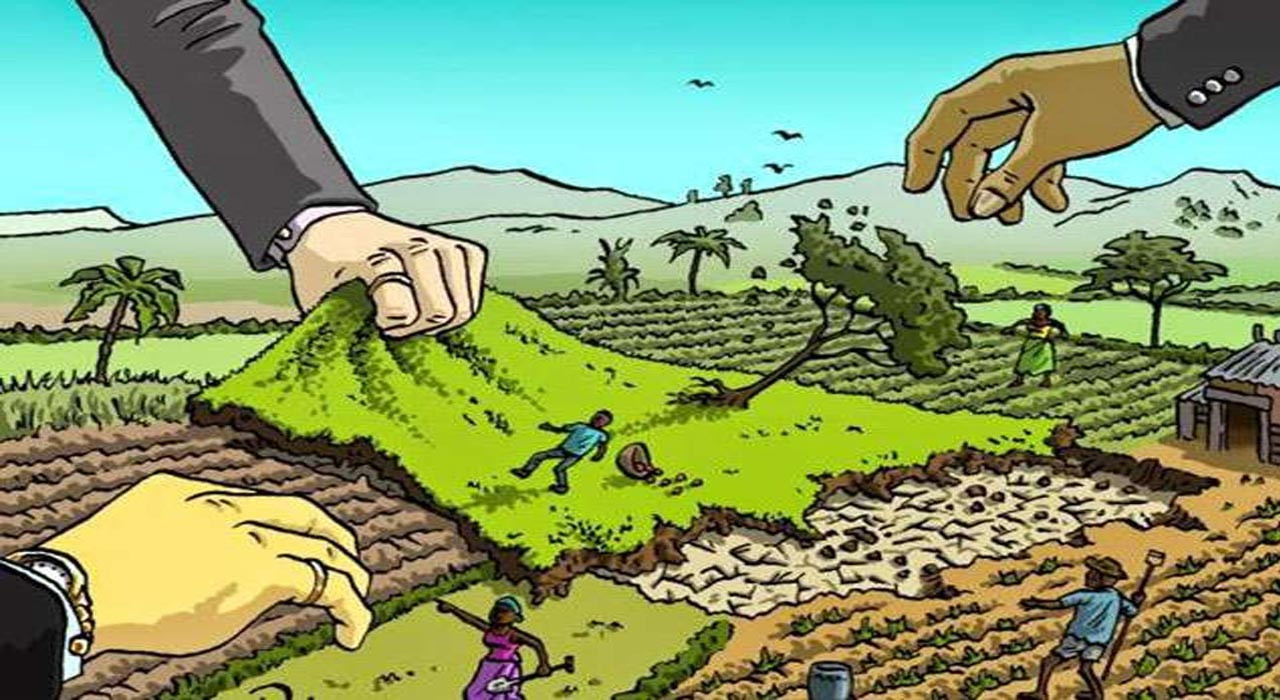
Bhaktapur: During the tenure of previous governments, a large amount of government land was either registered in the names of private individuals or illegally occupied. Public land, Guthi land, unregistered public land, land exceeding ownership ceilings, industrial land, factory premises, and even land formerly belonging to the royal family have been encroached upon, registered, or leased to private entities through political influence.
Many individuals and organizations secured government land for decades at nominal prices through Cabinet decisions or favorable court rulings.
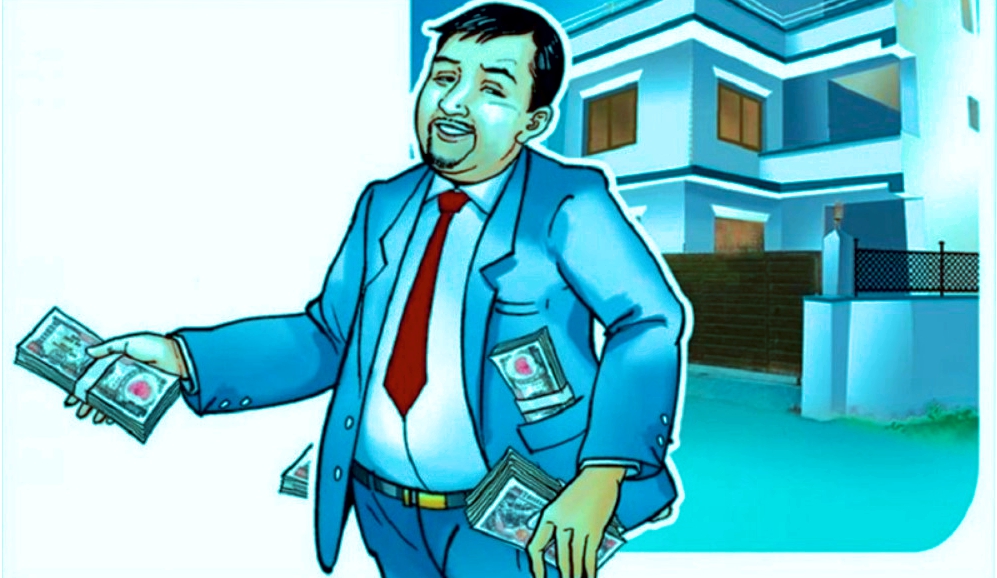
One notable example is the 161 ropanis of government land at Gongabu New Bus Park (Kathmandu Metropolitan City–26), which was leased to Lotse Cooperative for 50 years at what critics describe as a token price. In 1997 (2054 B.S.), Kathmandu Metropolitan City signed an agreement under which the cooperative would pay only Rs. 11 million annually** in rent. Since then, Lotse has built commercial structures and operates businesses on the land.
The cooperative reportedly earns billions of rupees in monthly revenue, while the Metropolitan City receives only a fraction in annual rent. Furthermore, additional government land around the bus park has allegedly been occupied with private houses and buildings. Despite these encroachments, the Metropolitan City has neither terminated the lease agreement nor investigated the extent of the occupied land. This is only one example among hundreds of thousands of ropanis of government land reportedly under illegal occupation across Nepal.
Political leaders, government officials, and legal professionals have allegedly been used to facilitate the registration, occupation, and transfer of public land. In some cases, government land leased to private entities has even been mortgaged to banks and financial institutions to obtain loans.
In Chitwan, 1 bighas of land belonging to Bharatpur Hospital were leased to the College of Medical Sciences for 9 years at a nominal rate. The land was later used as collateral to secure loans exceeding Rs. 1 billion. The Cabinet led by Sher Bahadur Deuba** approved the lease on June 27, 1996 (2053 Asar 14 B.S.).
Similarly, in East Nawalparasi, the 780 ropanis of government land belonging to Bhrikuti Paper Mill have remained under the control of the Golchha Organization. In 1992 (2049 Kartik 5 B.S.), the government signed an agreement to sell the land to Himali Pipes, a company associated with the Golchha Group, for Rs. 170 million. However, the company reportedly still owes nearly Rs. 50 million while also using the land as collateral to obtain approximately Rs. 12 billion in bank loans.
Successive governments also approved the sale or lease of land belonging to government-owned industries, including the Biratnagar Jute Mill, at prices critics consider far below market value. Government land in Anamnagar, Hanumanthan, Bijulibazar, Dhobikhola, Babarmahal, Maitighar, Ramshah Path, Ghattekulo, Kalisthan, Putalisadak, Maitri Devi, Sifal, and surrounding areas has also reportedly been registered in the names of private individuals.
Areas surrounding Sallaghari Army Barracks, Changa Ganeshthan, the road to Kharipati, Duwakot Tempo Park, Nikosera, Radheradhe, and Srijananagar were designated as government land, Guthi land, public land, cremation grounds, and wetlands during the national land survey in 1964 (2021 B.S.). Today, these areas are densely covered with private residential buildings.
Now, under the leadership of Balen Shah, investigations have reportedly begun into government land transferred to private individuals or leased at nominal prices. Such lease agreements should be reviewed and, where legally justified, revoked. Cabinet decisions that unlawfully transferred government land into private ownership should also be reconsidered.
The article urges Land Minister Pratibha Rawal to take immediate action without delay. Recovering illegally occupied government land across the country is presented as one of her primary responsibilities, and the public expects her to fulfill that duty.
Express



Related News
Two Laws Under One Government: Banks Can Charge Any Interest They Want, Individuals Face Jail
By Anusha Thapa
One government, but two different laws. The issue is interest rates. The government allows banks and financial institutions to determine their own interest rates. Banks, finance companies, cooperatives, and micr...

"Politics is a game played by a group of incompetents" - Suresh Acharya (Social Worker)
Kathmandu. Suresh Acharya, who was born in the year 2029 in Dhunibesi Municipality 6 of Dhading District, has been aware of politics since a young age. Being active in various social activities as a teenager, the...

The struggles and unappreciated contributions of national players
Preface
The words of honor, identity and pride of the nation are not limited to the pages of history. Even today, they are born again and again in the playground. When a player sweats on the field carrying the nat...

Job Scam Thrives on False Promises While the Government Ignores Workers' Suffering
By Rusha Thapa
Bhaktapur, Nepal — While walking along the streets, one can easily notice posters and pamphlets carrying the words "Employees Needed" pasted everywhere—from electric poles and house walls to school compounds. These advertiseme...

The elephant came, the elephant came, and the federalism came
Hari Khatiwada
Kathmandu. There is a proverb in Nepali, "While trying to pick the ground, the pole fell." Yes, we are walking on the same path. Other countries modify their culture and taste their own to the world, while we forget ou...

Philosophical path of possessor ! the possession Philosophy !
© Nirmal Puri Bhogi
Mediabaaji.com Kathmandu, November 29. In the general sense, possession philo...