
Here is the complete English text without any stars, bullets, highlights, or markdown formatting:
-
Media Baaji

- Tue, 6 October 2026

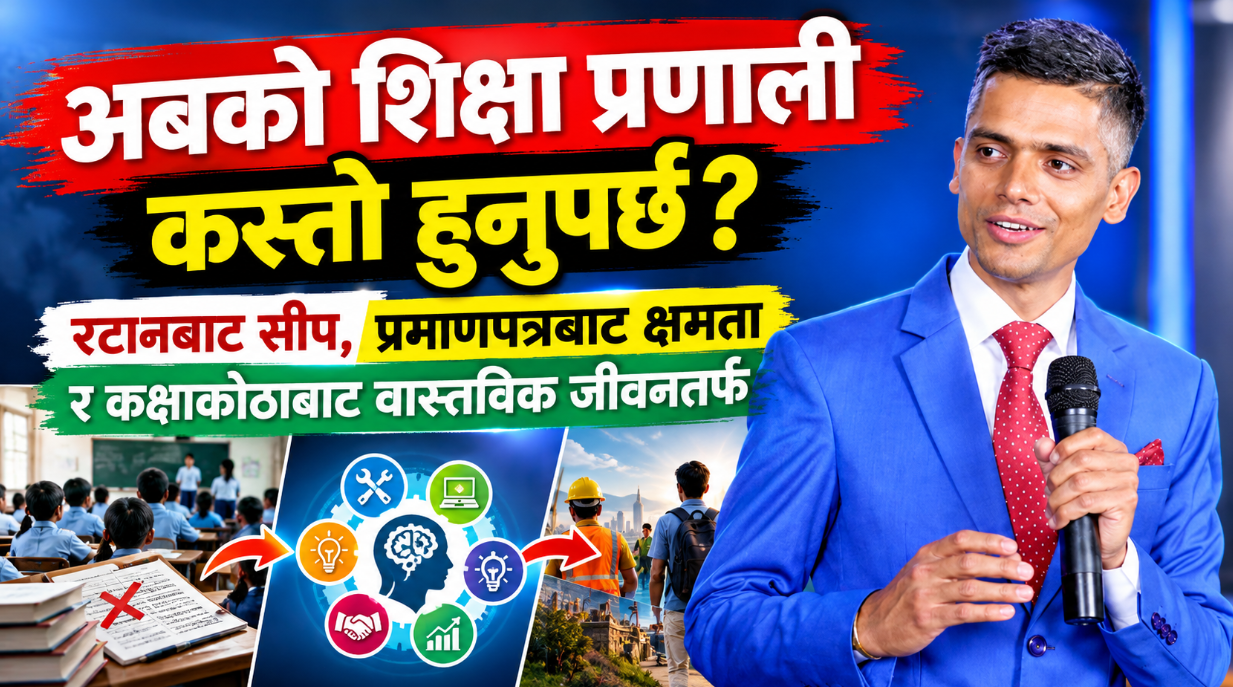
- We need an education of thinking, not rote learningIn traditional education, much time is spent memorizing information and reproducing it in exams. However, in the era of the internet and AI, information itself is no longer a scarce commodity. Today, a student can access information from thousands of sources within seconds. Therefore, education today should focus more on developing capabilities such as Critical Thinking, Creativity, Concentration, Focus, Meditation, Memory Power, and Problem Solving.Instead of telling students "This is the answer," we should teach them to ask questions like "Why do you feel this way?", "What could be another solution to this?", and "How can we verify this?" Parrot-like rote learning will not bring real transformation in education. If a peacock emerges from the forest, it gets the opportunity to display its talent; but if it remains confined to the forest forever, its potential may vanish right there. Our current education system has created a situation where many students remain lost within the boundaries of textbook knowledge.After years of education, a student obtains a certificate, but in many cases, fails to receive adequate opportunities to develop life skills, decision-making abilities, problem-solving skills, and the chance to identify their true potential. Our students today were born in a different era. Therefore, decades-old teaching styles alone are not sufficient for them. They need an education that teaches them where and how to apply what they read in real life. One of the many reasons students feel disinclined to study might be this question—"Why should I read this? What is its utility in my life?"If students cannot connect their studies with their lives, futures, and dreams, learning can become a burden. We taught students how to write answers; now we must teach them how to ask questions.We gave them information; now we must teach them to be curious.True education is not just teaching how to give the right answers; it is also teaching how to ask the right questions.
- Teach responsible use of AI, rather than banning itThere is a need for serious debate on mandatorily integrating AI (Artificial Intelligence) into the current curriculum. Artificial intelligence is no longer just a subject of the future; it has become a part of present-day education.The United Nations Educational, Scientific and Cultural Organization (UNESCO) has also consistently highlighted that along with opportunities in education, AI raises important questions regarding governance, ethics, equal access, and responsible usage.
- Verifying whether that information is correct or not,
- Finding the source,
- Explaining it in their own language,
- Distinguishing facts from opinions,
- Not blindly accepting AI's responses,
- Paying attention to privacy and ethics.With AI, work that takes a full day can be completed in an hour; it can also be used to search, organize, and analyze large volumes of information. Similarly, through the correct application of technology, students can make long-duration learning more effective, personalized, and interactive. The time saved can be utilized to learn communication, creativity, leadership, problem-solving, entrepreneurship, and other essential life skills.
- Life skills must be mandatory in the curriculumAfter graduating from school, it is not enough for a student to step out carrying only the knowledge of mathematics, science, languages, and social studies.A student must also know how to manage money, manage time, speak in public, work in a team, solve problems, make decisions, learn from failure, and manage their emotions.
- Linking education from learning to earningAnother critical question in Nepal’s education system is—where does a student reach after completing their education?Today's students should acquire practical skills alongside their studies. In our current system, a student spends many years completing their education, holds a certificate in hand, and then begins searching for opportunities, saying "I need a job."Even after obtaining a degree, if practical skills, confidence, communication abilities, entrepreneurial mindset, and work competency are not developed, a major part of education remains incomplete. In many cases, after completing studies, students have to spend additional time and money to acquire job-ready skills. Ultimately, many face the compulsion to go abroad in search of employment and work in fields completely unrelated to their capabilities.
- The role of teachers must also evolveWith the advancement of AI and digital technology, the importance of teachers will not diminish; rather, the teacher's role will become more dynamic and vital.A teacher is no longer just a person delivering textbook information. A teacher must become a Facilitator, Mentor, Life Coach, Learning Designer, and Role Model.They should be individuals who listen attentively to students, teach through diverse methods, stay updated with technology, understand the family and social background of students, and impart practical knowledge in an engaging style rather than just lecturing.
- Examination systems must changeIf we spend the entire year teaching students only "How to get good marks in exams?", the objective of education remains confined to numbers.Assessment should measure not just memory power, but understanding, application, creativity, problem-solving, communication, and project work.
- Every student does not learn the same wayIn the same classroom, every student's capacity, interest, family environment, learning speed, and needs are not uniform.Some students learn well by listening, others by seeing, some by reading, and others through direct practice. Therefore, varied teaching methods and learning experiences must be employed.Future education should be more flexible and learner-centered, rather than relying on a one-size-fits-all model.Instead of leaving weaker students behind as "weak," they must be provided the necessary support. Faster learners should be given additional challenges. Inclusive arrangements must exist for students with disabilities, those from economically weaker backgrounds, remote areas, and diverse linguistic backgrounds. In this way, the education system should not "mold everyone into a single frame," but create an environment to identify and develop the inner potential of every student.
- Digital education is not merely placing computers in a classroomInstalling computers, smartboards, or internet facilities in a school does not automatically constitute digital education.Technology must improve learning outcomes.Students need to learn not just how to operate digital devices, but how to use them to make studying effective, search for information, verify sources, maintain cybersecurity, and become responsible digital citizens.From basic computer knowledge to required hardware, software, digital security, AI, and practical tech application, concepts can be progressively introduced into the curriculum based on age and grade level, enabling hands-on practice in classrooms. UNICEF has clarified that technology alone is insufficient for digital education; it must be connected with evidence-based pedagogy, teachers, institutional systems, and equitable access.Therefore, in Nepal, rather than focusing solely on "a device for every classroom," the more crucial question is "how to provide meaningful digital learning opportunities to every student."
- Early childhood development must be education's top priorityEducational reform does not start at universities; it begins in early childhood. Young children should not merely be made to memorize letters and numbers; a foundation of language, social behavior, curiosity, play, creativity, collaboration, and problem-solving must be established from an early age. In early childhood development, building a child's self-confidence, curiosity, social behavior, and desire to learn should be a core objective of education. If a love for learning can be nurtured from school entry age rather than imposing the pressure of exams and competition, its positive impact can last a lifetime.
- "Humanity" must remain at the center of the education systemNo matter how powerful AI becomes, education is not merely a technology project; it is a process of human development. Students must learn honesty, responsibility, respect, cooperation, compassion, discipline, social accountability, and ethical decision-making alongside academic knowledge. Machines may perform many tasks in the future, but human society will always need trustworthy, responsible, sensitive, and wise human beings.




Related News

Job Scam Thrives on False Promises While the Government Ignores Workers' Suffering
By Rusha Thapa
Bhaktapur, Nepal — While walking along the streets, one can easily notice posters and pamphlets carrying the words "Employees Needed" pasted everywhere—from electric poles and house walls to school compounds. These advertiseme...

From Water to Medicine, Inviting Diseases: As Businessmen Play with the Health of the General Public for Their Own Gain, the State Remains Silent!
Financial Victims Have Been on the Streets for Months, While the Government Is Focused on Durga Prasai
Rusha Thapa
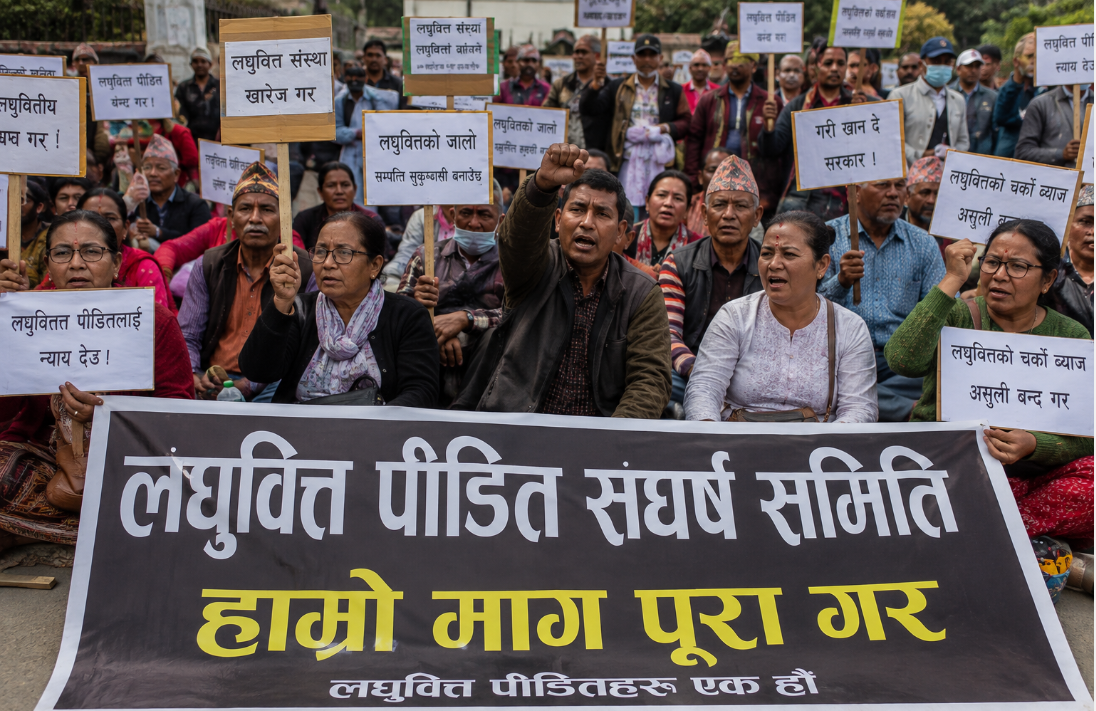
Bhaktapur. The protest of microfinance victims is still ongoing. For months, they have been staging sit-ins at the National Human Rights Commission and other government bodies, demanding justice. Their suffering has become unbear...

Four Months of the Balen Government: Public Frustration Grows as Blacklist Fears Loom
By Anusha Thapa_____
Bhaktapur: Nepal has now spent 18 months on the Financial Action Task Force (FATF) grey list after being placed there on February 21, 2025 (Falgun 9, 2081 BS). Under the current timeline, the country is expected t...

Common people and traders are not excited about the New Year, inflation and recession!
Rusha Thapa
Bhaktapur. The new year has begun. However, more than the excitement of the new year, there is concern among the common citizens. There is widespread talk about the market becoming more expensive in 2083. Common people say that t...