
Rising Unemployment Leaves More Young People Unmarried, While Pensioned Employees Continue Marrying Even in Old Age
-
Media Baaji

- Sat, 19 September 2026

Rusha Thapa
Bhaktapur, In recent times, many young people have chosen not to enter into marriage because of unemployment. Even those who have jobs often do not want to marry because their income is insufficient. Since they find it difficult to support themselves, they are reluctant to take on additional responsibilities. On the other hand, unemployed or low-income men often struggle to find families willing to marry their daughters to them. Even when marriages do take place, financial difficulties can quickly lead to separation or divorce. The number of young people getting divorced at an early age is also increasing.
Interestingly, while young people in the country are increasingly avoiding marriage or experiencing divorce after marriage, former government employees are continuing to marry even in old age.
The reason is pension.
Retired government employees receive pensions from the government. There are also cases in which people marry at an advanced age with pension benefits in mind. Under the existing system, in certain circumstances, a spouse may receive pension benefits after the death of the pensioner. As a result, there are claims that some pension-receiving men remarry soon after the death of their wives.
Some even marry after crossing the age of 70, when they already have grandchildren. At the same time, some young women and women with limited income are reportedly willing to marry pensioners rather than unemployed or low-income young men. One reason cited is the possibility of receiving pension benefits after the husband's death.
Choosing whom to marry is a matter of personal choice and individual preference. But is it appropriate for someone to marry a person three decades older simply for pension benefits? Is money everything? The government provides pensions to retired employees in recognition of their service to the country and the public. But if marriage is being used primarily as a means of gaining access to pension benefits in old age, does that amount to misuse of the pension system?
Marriage at any age is a person's freedom and right. People can need companionship and support at any stage of life. Therefore, there is no inherent problem with an elderly man marrying a younger woman if both enter the relationship willingly and for genuine reasons. However, concerns arise when marriage is allegedly motivated primarily by pension or property.
If such a trend continues, there could eventually be more unmarried young people while a growing number of elderly people remain married. This could also have implications for the country's demographic structure. The government therefore needs to review the pension system and consider whether pension benefits should continue to be transferred to a spouse after the pensioner's death or whether the system needs to be structured differently.
Former government employees who entered public service around 2032–33 BS on monthly salaries of around Rs. 25 to Rs. 35 are now receiving pensions reportedly ranging from Rs. 45,000 to Rs. 60,000 per month. They also receive an advance equivalent to one month's pension during Dashain and access to medical treatment under applicable provisions.
The senior citizen allowance, which started at Rs. 100 in 2051 BS, has now reached Rs. 4,000.
Meanwhile, serving government employees receive monthly salaries ranging from around Rs. 40,000 to Rs. 106,000 depending on their position. They also receive two sets of uniforms annually, transportation facilities for commuting to and from the office, a monthly dearness allowance of Rs. 5,000, and medical treatment for themselves and their families under applicable government provisions. Female employees are also entitled to maternity leave, while male employees can receive leave when their wives give birth.
Under the current law, female employees are entitled to 90 days, or three months, of maternity leave, while male employees whose wives give birth are entitled to 15 days of leave with pay. There are also discussions and legislative efforts aimed at increasing maternity leave for women to six months and paternity leave for men to 42 days.
Critics argue that while government employees receive extended paid leave and other benefits, many poor citizens have no such protection. Some women from low-income families may have to return to work immediately after giving birth because they cannot afford to stop working. There have also been cases of women facing serious financial difficulties during childbirth.
The article also questions situations in which a pension-receiving husband may receive a pension while his wife simultaneously receives a senior citizen allowance.
The article further criticizes the conduct of some government employees, alleging that some accumulate unexplained wealth while in service and that corruption occurs in areas such as contracts and procurement. It also accuses some employees of neglecting their duties, spending working hours using phones or social media, and spending time outside their offices instead of serving citizens.
The article claims that some employees arrive late despite official working hours beginning at 9 a.m., register their attendance, have breakfast and leave their workplaces. It also alleges that government revenue collection stops at certain times of the day and that some employees spend office hours in canteens, conduct share trading, use Facebook and TikTok, or spend long periods on personal telephone calls.
It further claims that intermediaries continue to operate inside government offices and that some employees receive bribes from service seekers through intermediaries or writers.
Government employees are paid from taxes collected from citizens and receive salaries, allowances, uniforms and other facilities. However, the article alleges that some employees treat ordinary citizens disrespectfully, particularly those who appear poor or wear worn-out clothing.
The overall situation of public service, according to the article, remains difficult to reform regardless of which political party is in government.
The article argues that government employees have also become an important vote bank for political parties and that governments often make decisions to satisfy them. It also raises questions about recent salary increases for government employees, arguing that salaries should not be increased without considering the country's broader economic situation.
According to the article, prioritizing benefits for government employees while the country faces economic challenges could create financial problems in the future. It calls on the government to take the issue seriously.
The article also criticizes elected representatives, arguing that many now receive substantial salaries and benefits but continue to demand more. It questions whether the country can achieve meaningful development if public officials and elected representatives continue to receive increasing benefits without corresponding improvements in public service.
The article concludes by asking how long taxpayers will continue to bear the cost of government employees and elected representatives if public services do not improve
Express




Related News

The elephant came, the elephant came, and the federalism came
Hari Khatiwada
Kathmandu. There is a proverb in Nepali, "While trying to pick the ground, the pole fell." Yes, we are walking on the same path. Other countries modify their culture and taste their own to the world, while we forget ou...

Unimplemented Genji Report Repression Recurred: Genji Agua Hamal
Kathmandu. Ravi Kiran Hamal, the leader of the Genji movement, met with the Commissioner of the National Human Rights Commission, Lily Thapa, and discussed in detail the implementation of the commission's report on the Genji movement, the state of...

The art of winning is “madness” as long as you don’t give up - DR Dahal
The journey of life is uncertain, challenging and full of difficulties. We all face the problem of never seeming to succeed and many failures. However, the trials of life are the real test of one's determination, courage, and self-strength. Decide...

Question to the Land Minister: When Will Lease Agreements Granted at Throwaway Prices Be Revoked and Encroached Government Land Be Recovered?
By Rusha Thapa
Bhaktapur: During the tenure of previous governments, a large amount of government land was either registered in the names of private individuals or illegally occupied. Public land, Guthi land, unregistered public land, land e...
Government Employees and Elected Representatives Get Benefits Galore, While Private-Sector Workers Are Left Struggling
Anusa Thapa
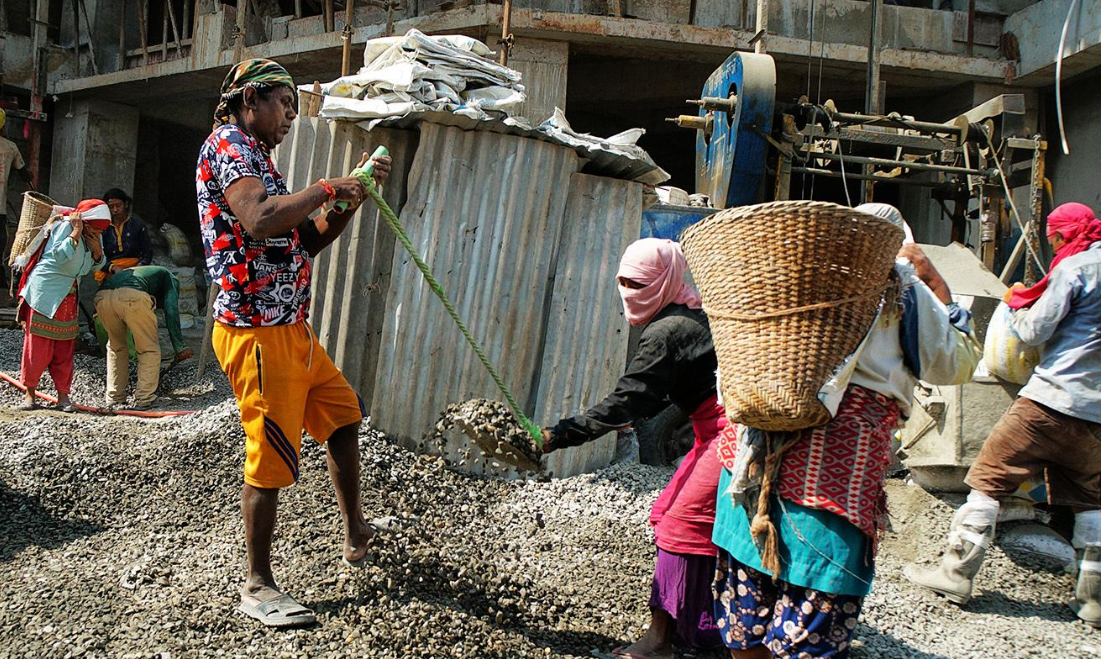
Bhaktapur: The government has set the minimum monthly wage for private-sector workers at Rs. 21,500. According to government regulations, organ...
Rent, Water, Electricity, Garbage, and Parking: Landlords Overcharging Tenants as All Three Levels of Government Avoid Setting Fee Standards
Bhaktapur – The government has fixed the electricity tariff that consumers must pay. The Nepal Electricity Authority charges landlords Rs. 9.40 per unit, but many landlords reportedly charge tenants between Rs. 18 and Rs. 30 per unit, earning a pr...