
New Government Still Relies on Foreign Loans Instead of Collecting Revenue
-
Media Baaji

- Mon, 22 June 2026

By Anusa Thapa
Bhaktapur, Nepal — The courts issue orders, but the government fails to implement them. This reality is clearly reflected in the government's inability to collect taxes and revenues despite repeated court directives.
Courts at all three levels of Nepal's judiciary have ordered the government to recover millions and even billions of rupees in unpaid taxes and dues from various individuals and business firms. One of the most notable examples is Bhatbhateni Supermarket. Years have passed since the court ordered the government to recover approximately NPR 4.45 billion in allegedly evaded taxes, yet the amount remains uncollected.
Likewise, numerous court verdicts involving fines and imprisonment have yet to be enforced. The government has failed both to collect penalties and to ensure that convicted individuals serve their sentences.
The government led by Prime Minister Balen Shah came to power promising transformation, good governance, accountability, and strict action against corruption and tax evasion. Nearly three months have passed since its formation, yet there has been little visible progress. Corruption files remain unopened, tax evaders continue operating without consequences, and court decisions remain largely unenforced.
Meanwhile, epal's economic condition remains fragile. State coffers are under pressure, and the government continues approving foreign loans to finance public expenditure.
If the government were serious about collecting the revenues already identified by the courts, why would it need to depend so heavily on foreign borrowing? Bhatbhateni is not the only example. Numerous businesses and individuals have been accused of tax evasion. Recovering these funds could significantly strengthen the country's finances.
Foreign loans are not free. They come with interest obligations that future generations must bear. Nepal increasingly appears to be borrowing from one country simply to repay debts owed to another.
The state also has billions of rupees in outstanding electricity dues and unpaid obligations from industries and businesses. Many entities continue using public resources while delaying payments owed to the government. While private actors enjoy interest-free access to public money, the state is forced to seek expensive foreign loans.
Thousands of businesses operate without proper registration. State-owned properties have been leased at extremely low rates, while some lessees fail even to pay the agreed rent. Effective regulation and enforcement could generate substantial revenue without increasing public debt.
The money exists within the country's economy, but the government must be willing and capable of collecting it. Revenue can be generated from many sectors, yet the new administration appears to be following the same path as previous governments—borrowing heavily while failing to strengthen domestic income sources.
Many wealthy individuals and business groups have accumulated fortunes through tax avoidance, misuse of public resources, questionable land acquisitions, and close political connections. Yet Finance Minister Dr. Swarnim Wagle has publicly stated that the government will not engage in a "crackdown" on businesses.
Those who have violated the law should face legal consequences. Wealth accumulation should be transparent and accountable. The state has a responsibility to determine whether assets have been acquired legally and whether all tax obligations have been fulfilled.
The Gen-Z movement that emerged on September 23 and 24 demanded accountability, transparency, and an end to corruption. That movement contributed significantly to political change and helped create the conditions that brought new leaders to power. The government should not forget the aspirations that inspired those protests.
Anyone rsponsible for harming the nation, abusing public property, evading taxes, or engaging in corruption should be held accountable regardless of status or influence. Only then can good governance become a reality.
The government should reopen investigations into major controversies, including Giribandhu, Lalita Niwas, Bhrikuti Paper Industry, Patanjali, and other disputed cases. Public officials who facilitated the transfer or misuse of state assets should also be investigated.
Tax evaders should face immediate legal action. Cartels and syndicates that distort markets should be dismantled. Illegal enrichment and abuse of public resources must no longer be tolerated.
If the government fails to act decisively, the Rastriya Swatantra Party (RSP) risks suffering the same fate as the traditional parties it once criticized. As the administration approaches its first hundred days in office, many citizens struggle to identify significant achievements.
The government's rhetoric is ambitious, but its pace of action remains slow. If political will exists, corruption investigations can begin immediately. There is no need to wait years before opening files and launching inquiries.
The public granted the RSP historic support not out of affection but out of hope for meaningful change. The party must remember that trust is earned through results, not promises.
Since taking office, the government has reportedly approved foreign loans worth hundreds of billions of rupees. At the same time, civil servants' salaries have been increased by 21 percent, inflation allowances remain unchanged, pensions have risen, and benefits for elected representatives have expanded.
Yet sustainable sources of revenue remain limited.
Sri Lanka's debt crisis demonstrated the dangers of excessive borrowing. Nepal must learn from that experience before it faces similar challenges. If the current administration intended to govern in the same manner as previous governments, one must ask why citizens took to the streets demanding change.
People sacrificed their lives, public property suffered significant damage, and billions were spent responding to unrest. Those sacrifices were made in the hope of building a better system.
Today, many citizens feel that the government is drifting toward the same habits that weakened previous administrations. Public expectations remain high, but visible signs of reform are limited.
The government still has an opportunity to deliver meaningful change. If it succeeds, it may reshape Nepal's political future. If it fails, it risks becoming another chapter in the long history of unfulfilled promises.
With local and provincial elections approaching, public judgment will soon arrive. Government spending continues to rise, while revenue generation remains uncertain. The challenge before the administration is clear: strengthen domestic revenue, enforce the law equally, reduce dependence on foreign borrowing, and fulfill the promises that brought it to power.
Express




Related News

The stock market increased by 64 points, turnover of 21 billion
Kathmandu. The NEPSE index increased by 64.67 points on the fifth trading day of the week. After the election, the stock market, which started rising gradually, closed at 2877.02 points on Thursday with an increase of 2.29 percent.
When 5 cr...
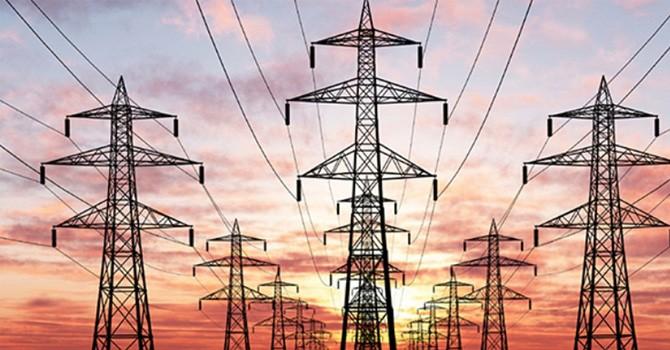
The 12-year blockage of Dhalkebar-Hetaunda 400 KV transmission line has been removed
Kathmandu F. The government has removed the main obstacle to the construction of Dhalkebar Hetaunda 400 KV high voltage transmission line, which has been stalled for various technical and legal reasons for the past 12 years. With the important dec...

Demat accounts in Nepal crossed 77 lakhs, 26 percent were linked to stock market
Kathmandu. According to the Nepal Capital Market Development Roadmap, 2083 recently published by the Nepal Securities Board, the number of demat 9 beneficiary accounts in Nepal has reached 77 lakh 66 thousand five hundred and 65. Around 1.7 lakh d...

Another 18 industries were cut
Kathmandu. Nepal Electricity Authority has cut the lines of 18 more industries amid the trunk and dedicated line tariff disputes. The authority cut the line of that industry on Friday evening. According to Rajan Dhakal, spokesperson of the authori...

Corporation will distribute gas until supply is smooth
Kathmandu. Nepal Oil Corporation has decided to regularize gas distribution from the Teku office in Kathmandu until the supply of gas to the market is smooth. Due to the lack of gas in the market, the corporation has been distributing different br...

Fall in the price of gold and silver, how much is the transaction per tola today?
Kathmandu. There has been a general decline in the price of gold and silver in the Nepalese market on Monday. According to the Federation of Nepal Gold and Silver Dealers, compared to Sunday, gold decreased by Rs 400 per tola on Monday. The federa...