
ADB Project’s Rs 420 Million Budget Under Scrutiny, Consultant Selection Sparks Controversy
-
Media Baaji

- Fri, 4 September 2026

Kathmandu — The consultant and service provider selection process under the Rural Connectivity Improvement Project, implemented through the Department of Local Infrastructure Development with support from the Asian Development Bank, has come under controversy.
Stakeholders have raised serious questions over the transparency of the consultant selection process, alleging that the evaluation criteria prepared for training and capacity development programs could benefit only a limited number of institutions.
The project has a total budget of Rs 420 million and is expected to benefit around 5,909 people. Approximately Rs 240 million has been allocated for capacity development services, while around Rs 180 million has been allocated for skills development training.
Stakeholders have demanded that the ongoing Expression of Interest process be cancelled and restarted using transparent, objective and competitive criteria. A delegation representing the concerned stakeholders submitted a memorandum to the Director General of the Department of Local Infrastructure Development, Ashok Kumar Shah, raising concerns over the evaluation process.
One of the major concerns is related to the scoring system for joint venture partners. According to the stakeholders, the lead partner is allocated 20 points, while the JV partner receives only five points. They argue that JV partners also carry technical and managerial responsibilities and therefore their experience should receive appropriate weight in the evaluation.
Questions have also been raised about the definition of similar project experience and the criteria used to evaluate experience in capacity development programs. Stakeholders say unclear evaluation standards could prevent qualified organizations from receiving equal opportunities.
The stakeholders have further alleged that internal manipulation may have taken place during the consultant shortlisting process. They have claimed that certain officials involved in the project attempted to favor a limited number of consultants. However, the officials named in the allegations have not yet issued a detailed public response.
The stakeholders have called for the procurement process to be conducted in accordance with ADB procurement principles and international standards. They have emphasized that a project involving a large amount of public and development funding must maintain transparency at every stage, from the submission of expressions of interest to the technical and financial evaluation of proposals.
The matter has also been brought to the attention of the Office of the Prime Minister and Council of Ministers, ADB’s Nepal Office, the Commission for the Investigation of Abuse of Authority, the National Vigilance Center and the Public Procurement Monitoring Office.
Stakeholders have urged the concerned authorities to investigate the allegations, review the disputed evaluation criteria and take action if any irregularities are established.
They have also demanded that all qualified consulting firms be provided with equal opportunities through a fair and competitive selection process.
The controversy surrounding the Rs 420 million ADB-supported project has raised broader concerns about transparency, accountability and the effective use of development funds. Stakeholders have urged the government and concerned agencies to address the concerns promptly so that the project’s objectives are not affected.
Express





Related News
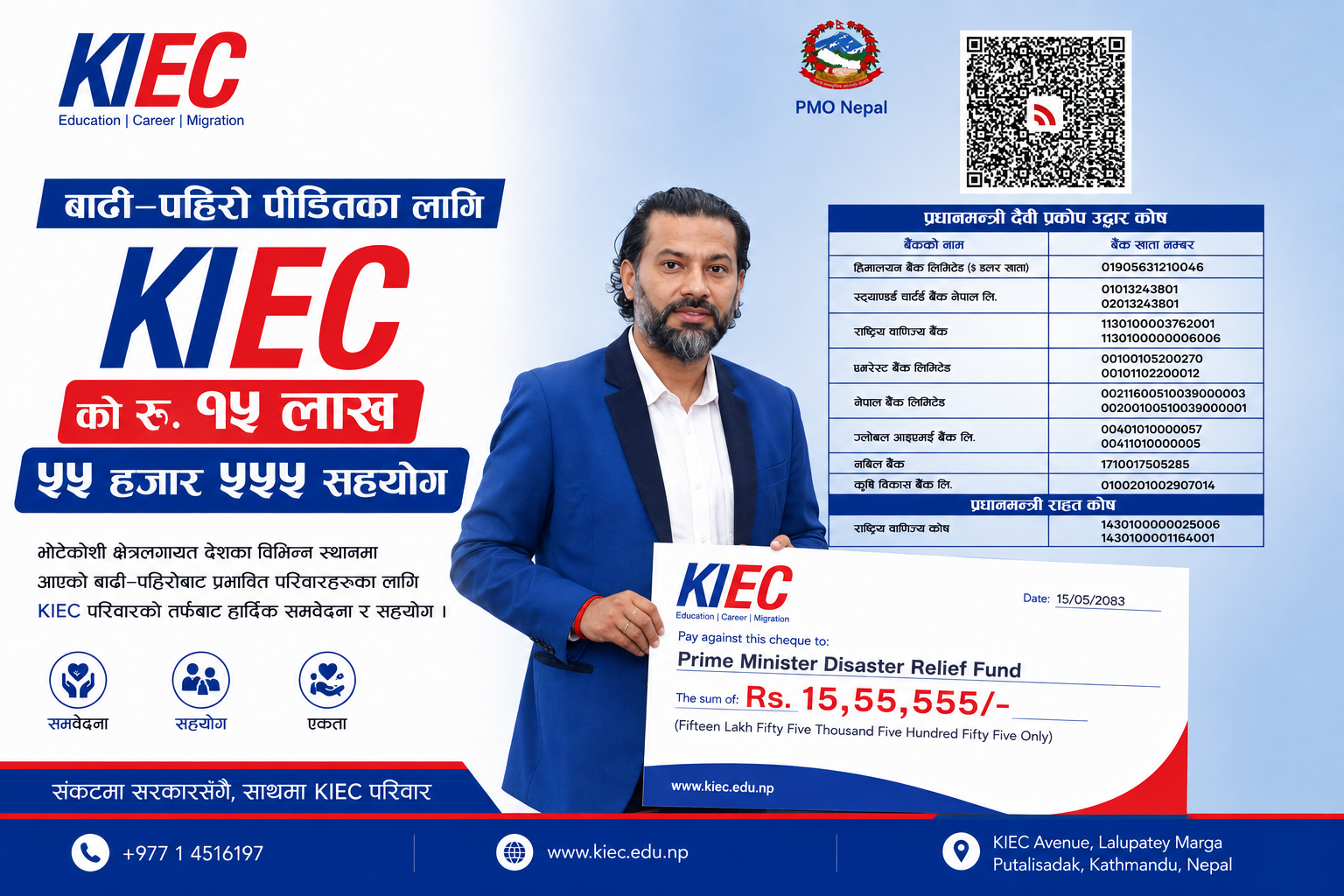
KIEC's assistance of Rs 15,55,555 for flood-affected
The Kathmandu. KIEC has contributed Rs.15,55,555 to the Prime Minister's Disaster Relief Fund for the relief of people affected by floods and landslides in different parts of the country, including Bhotekoshi area. The amount collected from the jo...

The line of Shivam Cement Industry in Hetaunda was cut
Hetaunda The electricity line of Shivam Cement Industry in Hetaunda sub-metropolitan ward number-16 Hatia has been cut. In the past, the Nepal Electricity Authority cut off the line of Shivam Cement Industry due to non-payment of premium tariff by...

The price of petroleum products has increased, how much is the price per liter?
Kathmandu. The prices of petroleum products have been adjusted. Nepal Oil Corporation has adjusted the prices of petrol, diesel and kerosene with effect from today. According to the corporation, the price of petrol has increased by one rupee per l...

Electricity and water lines were cut in 63 industries on the same day
- Kathmandu. Industrial Area Management Limited cut the water and electricity lines of 63 industries in one day. After not paying the rent and fees even using the government land, buildings and infrastructure of the industrial area for a long t...

New Government Still Relies on Foreign Loans Instead of Collecting Revenue
By Anusa Thapa
Bhaktapur, Nepal — The courts issue orders, but the government fails to implement them. This reality is clearly reflected in the government's inability to collect taxes and revenues despite repeated court directives.
Cou...

Asset confiscation, bank account freezing and foreign travel ban if the co-operative fund is not returned
Kathmandu. To make the cooperative sector more orderly, transparent and accountable, the government has brought forward a new process through the bill. The government passed the Cooperatives First Amendment Bill, 2083 in the House of Representativ...